

Landlord Responsibilities for Damp and Mould Explained
Landlords are legally responsible for damp and mould, must fix the cause and respond to tenant reports within strict statutory timeframes.
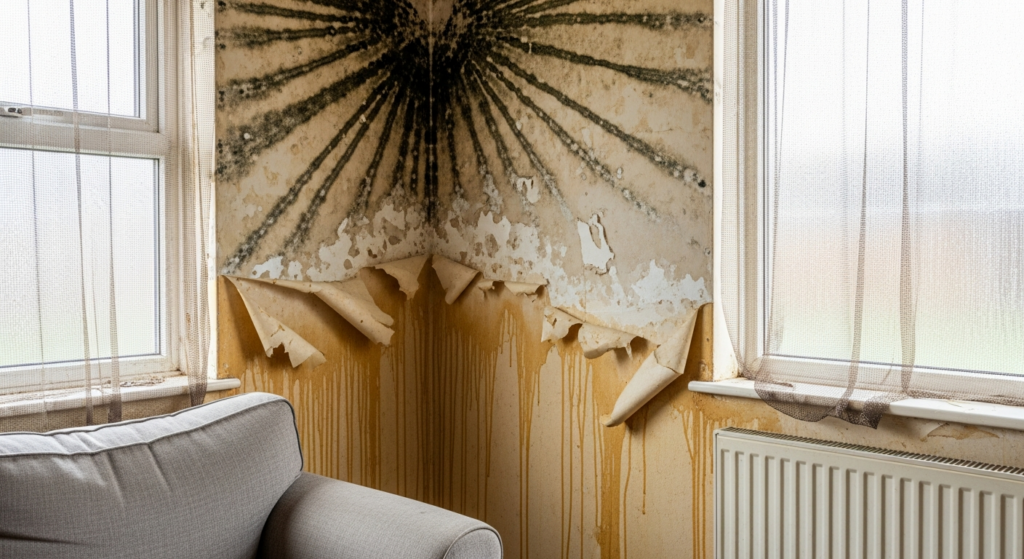
What are a landlord’s legal responsibilities for damp and mould?
Landlords must keep the property free from serious damp and mould hazards and repair the building elements that cause them. The Landlord and Tenant Act 1985 places the duty to maintain the structure and exterior on the landlord, including walls, roofs, gutters, windows and pipework. The Homes (Fitness for Human Habitation) Act 2018 requires the property to be fit to live in for the whole tenancy, and damp severe enough to affect health makes a home unfit. A landlord cannot pass these duties to the tenant through a contract clause.
What is Awaab’s Law and how does it affect landlords?
Awaab’s Law sets legal deadlines for social landlords to investigate and fix damp and mould hazards within fixed timeframes. It was introduced after the death of Awaab Ishak, who died from prolonged exposure to mould in a rented home. Under the rules, landlords must investigate a reported hazard within a set number of days, share the findings in writing, and complete repairs promptly where the hazard threatens health. The principles are also shaping expectations across the private rented sector under the Renters’ Rights Act, which strengthens tenants’ ability to challenge poor conditions and hold landlords to account.
How quickly must a landlord respond to a damp or mould report?
A landlord should act as soon as a tenant reports damp or mould, and social landlords now face defined statutory deadlines under Awaab’s Law. While exact timeframes depend on the severity and the type of tenancy, the safest approach for any landlord is to acknowledge the report immediately, arrange an inspection without delay, and document every step. A professional Damp, Mould and Water Damage Assessment creates a dated written record of the cause and the recommended action, which is exactly the evidence a landlord needs if a tenant escalates a complaint.
Not sure what you're dealing with?
Send us a photo on WhatsApp. We'll tell you what it is, no charge, no obligation.
What are the signs of a damp or mould problem in a rented home?
The clearest signs of a damp or mould problem are visible black spotting, a musty smell and water marks that return after cleaning. Look out for:
- Black or green mould on walls, ceilings, window reveals and behind furniture
- A persistent musty or earthy smell that does not clear with ventilation
- Tide marks or salt staining low on ground-floor walls
- Peeling paint, bubbling plaster or wallpaper lifting at the edges
- Condensation running down windows, especially in bedrooms and kitchens
- Cold, damp patches on internal walls or in corners
Because these symptoms overlap across rising damp, penetrating damp and condensation, a mould inspection pinpoints the real source rather than guessing.
Who pays for damp and mould repairs, landlord or tenant?
The landlord pays where the cause is a building defect, which covers most genuine damp problems. If damage results from a structural fault, failed damp proofing, defective guttering or poor maintenance, the cost falls to the landlord. A tenant may carry responsibility only where they have caused the issue through clear misuse or have blocked reasonable ventilation. What affects the final cost of remedial work includes the type of damp, the extent of the affected area, access, the age and construction of the property and whether redecoration is needed. We do not quote remedial figures until the cause is confirmed.
How can a damp survey protect a landlord?
A professional survey gives a landlord written proof of the cause, the correct remedy and the urgency of each issue. This protects you from carrying out unnecessary work, helps you respond to tenant complaints with evidence, and supports your position if a case reaches a local authority or tribunal. We confirm the price on a written quote once we understand the problem. Our Damp, Mould and Water Damage Assessment delivers a full insurance-ready written report with a photographic evidence appendix, clear findings and prioritised recommendations you can act on straight away.
- Report the issue and gather any tenant photos and dates
- Arrange a survey to confirm the cause and severity
- Receive the written report with prioritised recommendations
- Commission the correct remedial work in priority order
- Keep the report on file as evidence of compliance
Arrange your Damp, Mould and Water Damage Assessment
Damp & Mould Solutions UK carries out Damp, Mould and Water Damage Assessments for landlords across the UK, including central, north, south, east and west London and the surrounding boroughs. If a tenant has reported damp or mould, call us on 020 3051 8478 or send photos via WhatsApp for an initial view before we attend. Our assessment gives you a full insurance-ready written report with a photographic evidence appendix, clear findings and prioritised recommendations.
Frequently Asked Questions
Can a landlord blame the tenant for condensation mould?
Is black mould a health hazard a landlord must act on?
Does the Renters’ Rights Act change damp and mould rules?
What does the survey include?
If you've got damp, mould, or a leak, you already know it needs sorting.
The longer it sits, the worse it gets. Get in touch and we will agree a date with you. If it is urgent, say so when you call.