

Why Is There a Musty Smell in My House?
A musty smell almost always means hidden damp feeding mould, and here is how to find the source, clear it, and stop it returning.
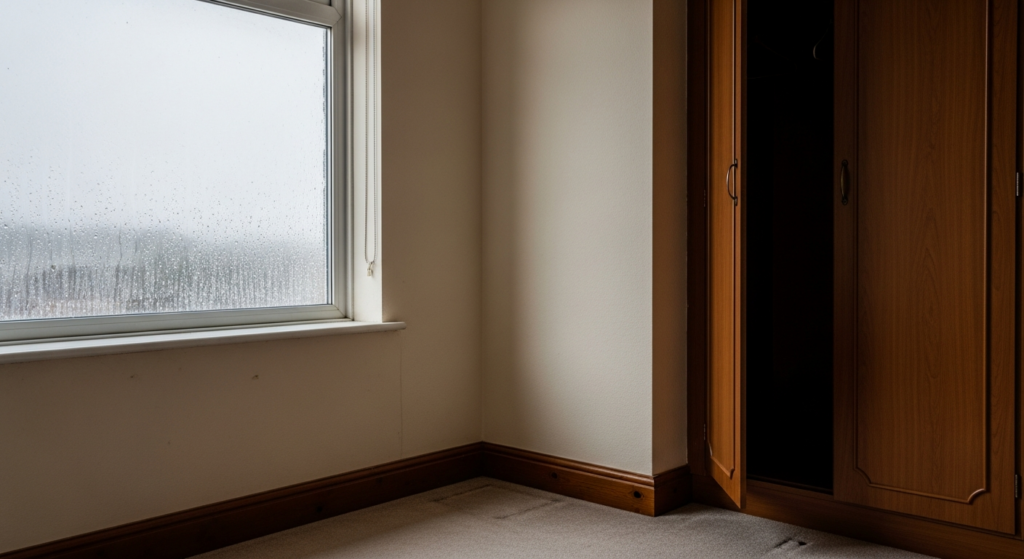
What causes a musty smell in a house?
A musty smell is caused by microbial volatile organic compounds (MVOCs), the gases that mould and mildew release as they grow on damp surfaces. Your nose detects these compounds long before you can always see the mould itself, which is why a room can smell stale even when the walls look clean. The smell is a symptom, not the problem. Behind it sits moisture that has nowhere to escape, feeding fungal growth on plaster, timber, fabric, or trapped dust.
Common moisture sources include condensation from everyday living, penetrating damp from a defective roof or wall, rising damp from the ground, and slow leaks from pipes or guttering. In London’s older housing stock, blocked sub-floor vents and bridged damp-proof courses are frequent culprits.
Where does the musty smell usually come from?
The smell usually comes from the dampest, least ventilated parts of the home, where moisture lingers and air barely moves. Hidden spaces concentrate the odour because the MVOCs build up rather than dispersing.
- Behind wardrobes and furniture pushed against cold external walls.
- Inside cupboards, lofts, and under-stairs storage.
- Bathrooms and kitchens with weak or no extraction.
- Under suspended timber floors and in cellars or basements.
- Around window reveals, skirting boards, and behind plaster.
- In soft furnishings, carpets, and stored clothing that has absorbed damp air.
How do I know if the smell is damp or mould?
You can tell it is damp or mould when the musty odour appears alongside visible moisture signs, and worsens in cold or wet weather. The smell rarely travels alone. Look for the physical evidence that confirms a moisture problem rather than a one-off spillage or a blocked drain.
- Black, green, or white speckled patches on walls, ceilings, or sealant.
- Peeling paint, bubbling plaster, or wallpaper lifting at the edges.
- Tide marks or salt staining low down on walls.
- Condensation on windows, especially in the mornings.
- Cold, clammy surfaces and a smell that returns days after airing.
- Increased sneezing, congestion, or irritated eyes indoors.
If the odour persists after thorough cleaning and ventilation, the source is structural or hidden, and surface cleaning will not resolve it.
Not sure what you're dealing with?
Send us a photo on WhatsApp. We'll tell you what it is, no charge, no obligation.
How can I get rid of a musty smell in my house?
You get rid of a musty smell by removing the moisture source first, then cleaning the affected surfaces, because masking the odour without fixing the cause only delays its return. Air fresheners and dehumidifiers help in the short term but do not address why the damp exists.
- Ventilate daily: open windows, run extractor fans during and after cooking and bathing, and keep trickle vents clear.
- Find the moisture: check for leaks, blocked gutters, missing pointing, and condensation hot spots.
- Pull furniture a few centimetres off external walls to let air circulate.
- Clean visible mould from hard surfaces with an appropriate fungicidal treatment.
- Dry out and launder or discard affected soft furnishings.
- If the smell returns, arrange a Damp, Mould and Water Damage Assessment (what many people call a damp survey) to locate hidden moisture.
A targeted Damp, Mould and Water Damage Assessment uses moisture meters, thermal imaging, and surface readings to pinpoint exactly where water is entering or accumulating, so repairs are precise rather than guesswork.
Is a musty smell in the house harmful to health?
A persistent musty smell can be harmful, particularly for people with asthma, allergies, weakened immunity, the very young, and the elderly. The MVOCs and mould spores you are breathing in can trigger respiratory irritation, coughing, headaches, and worsened allergic reactions over time. While a faint occasional smell is unlikely to cause lasting harm, a strong and ongoing odour points to active growth that should be assessed and removed.
A professional mould inspection identifies the species, the extent, and the underlying cause, so you treat the problem at its root rather than repeatedly wiping the surface.
Arrange your Damp, Mould and Water Damage Assessment
Damp & Mould Solutions UK carries out Damp, Mould and Water Damage Assessments across the UK, including London boroughs such as Islington, Camden, Hackney, Wandsworth, Lambeth, Southwark, Richmond, and the surrounding boroughs. We confirm the price on a written quote once we understand the problem. Our Damp, Mould and Water Damage Assessment includes a full insurance-ready written report with a photographic evidence appendix, clear findings, and prioritised recommendations you can act on. To get an initial view, call us on 020 3051 8478 or send photos of the affected areas via WhatsApp and we will tell you what we see.
Frequently Asked Questions
Why does my house smell musty but I cannot see any mould?
Will a dehumidifier stop the musty smell?
Does a musty smell always mean black mould?
How quickly can a musty smell come back after cleaning?
What does the survey include?
If you've got damp, mould, or a leak, you already know it needs sorting.
The longer it sits, the worse it gets. Get in touch and we will agree a date with you. If it is urgent, say so when you call.