

What Is Black Mould and Why Does It Grow in Homes?
Black mould is a moisture-driven fungus that grows on persistently damp indoor surfaces, and lasting removal means fixing the cause, not just cleaning the patch.
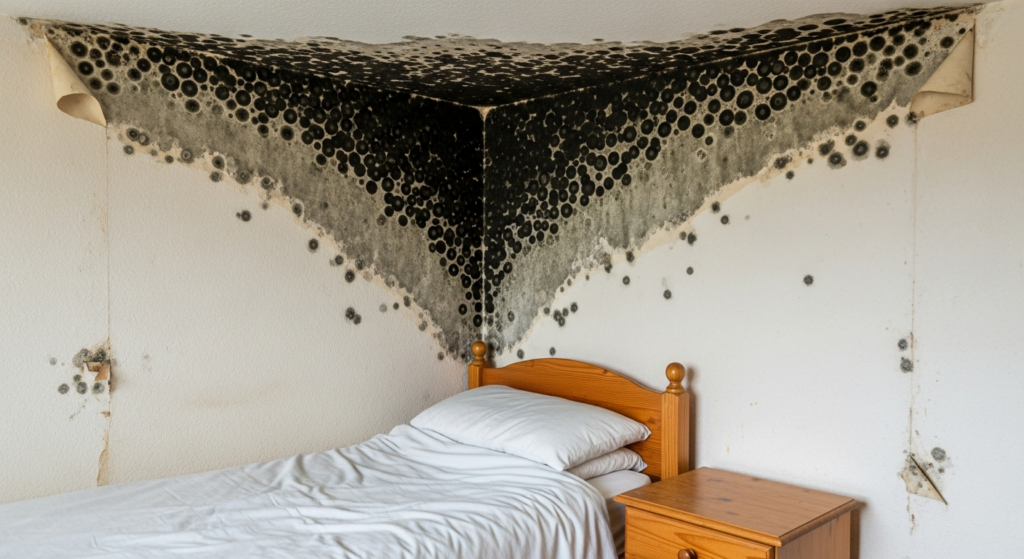
What exactly is black mould?
Black mould is a group of dark-coloured fungi that colonise damp building surfaces, with Stachybotrys chartarum the species most people mean by the term. It spreads through microscopic spores that are always present in the air. Those spores settle and grow only where they find a steady supply of moisture and something to feed on, such as plaster, wallpaper paste, timber or the dust on painted walls. The result is the familiar black or dark green patches, often with a slimy or speckled texture, in bathrooms, behind furniture and around windows.
Why does black mould grow in homes?
Black mould grows because a surface stays wet for long enough for spores to germinate, and the moisture nearly always comes from one of three sources: condensation, a leak, or rising or penetrating damp. Condensation is the most common culprit in London homes. Warm, humid air from cooking, washing and drying clothes meets cold surfaces like external walls and single-glazed windows, and water forms on them. Add poor ventilation and limited heating, and those surfaces never dry out.
Where does black mould usually appear?
Black mould appears wherever moisture concentrates and air movement is poor. The pattern of growth is a strong clue to the underlying cause, which is why a proper inspection looks at location as carefully as the mould itself.
- Bathroom ceilings, sealant and grout lines
- Behind wardrobes, sofas and beds pushed against cold external walls
- Window reveals, frames and the corners of rooms
- Inside cupboards and unheated box rooms
- Ceilings or walls below a roof, gutter or plumbing leak
- Skirtings and low wall sections where rising damp is present
Is black mould dangerous to health?
Black mould can affect health, particularly for people with asthma, allergies, weakened immunity, the very young and the elderly. Exposure to spores is linked to coughing, wheezing, a blocked or runny nose, sore eyes and skin irritation, and it can worsen existing respiratory conditions. The risk rises with the amount of mould and the length of exposure, so persistent growth across a wall or ceiling deserves prompt attention rather than a wipe-down and hope.
Not sure what you're dealing with?
Send us a photo on WhatsApp. We'll tell you what it is, no charge, no obligation.
Common warning signs in the home include:
- A musty, earthy smell that lingers even when surfaces look clean
- Recurring dark patches that return after cleaning
- Streaming condensation on windows each morning
- Peeling wallpaper, blistering paint or cold, damp-feeling walls
- Symptoms that ease when you leave the property and return at home
How do you get rid of black mould for good?
You get rid of black mould for good by finding and fixing the moisture source first, then removing the growth safely and protecting the surface against return. Surface cleaning alone treats the symptom; durable results come from a diagnosis-led approach.
- Diagnose the moisture source with a thorough survey, identifying whether condensation, a leak or rising damp is feeding the growth.
- Fix the cause, which may involve improving ventilation, addressing a leak, or correcting a building defect.
- Remove the mould safely using appropriate methods and containment so spores are not spread through the home.
- Restore and protect affected surfaces, then monitor humidity and ventilation to keep them dry.
Our mould inspection pinpoints exactly what is driving the growth, and our mould remediation service removes it and protects the surfaces afterwards.
What does a Damp, Mould and Water Damage Assessment cost and include?
We confirm the price on a written quote once we understand the problem. The survey delivers a full insurance-ready written report with a photographic evidence appendix, clear findings that name the moisture source, and prioritised recommendations you can act on. The cost of any remedial work that follows depends on the cause, the extent of the affected area and the access involved, which we set out in words within the report rather than guessing in advance.
Frequently Asked Questions
Is all black mould Stachybotrys?
Can I just paint over black mould?
How quickly does black mould grow?
Will better ventilation alone stop it?
Arrange your Damp, Mould and Water Damage Assessment
Damp & Mould Solutions UK carries out Damp, Mould and Water Damage Assessments across the UK, including central, north, south, east and west London boroughs and the surrounding areas. If black mould keeps returning in your home, call us on 020 3051 8478 or send photos via WhatsApp for an initial view before we attend.
If you've got damp, mould, or a leak, you already know it needs sorting.
The longer it sits, the worse it gets. Get in touch and we will agree a date with you. If it is urgent, say so when you call.