

What Causes Damp in Walls?
Damp in walls comes from rising damp, penetrating damp or condensation, and correct diagnosis decides the right fix.
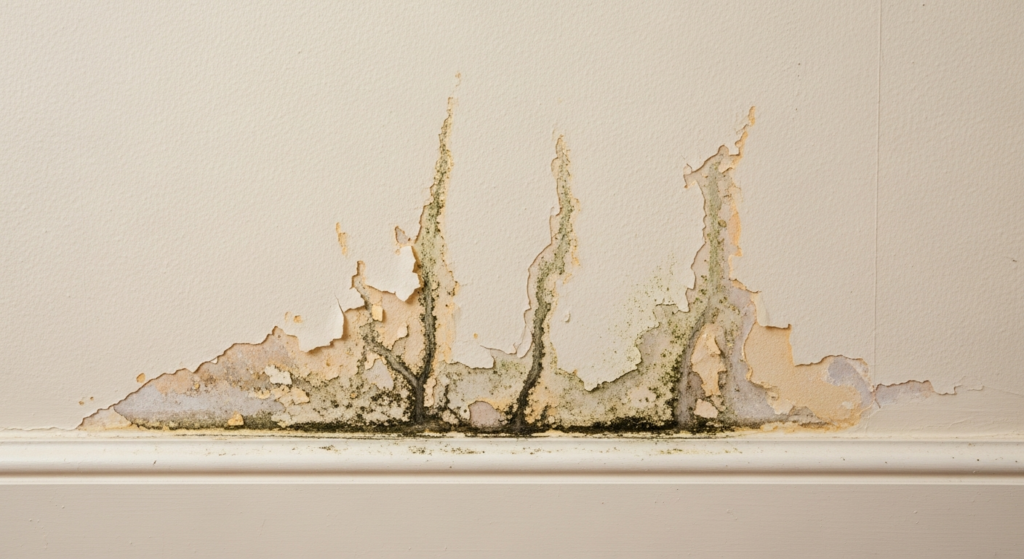
What are the three main types of damp in walls?
The three main types are rising damp, penetrating damp and condensation, and each has a distinct cause and cure.
Rising damp occurs when groundwater travels upward through porous brick and mortar because the damp-proof course is absent, bridged or has broken down. It typically reaches no higher than about a metre above floor level and often leaves a tide mark. Penetrating damp comes from water moving sideways through the structure: cracked render, failed pointing, blocked gutters, a slipped roof tile or a faulty seal around a window. Condensation, the most common cause in London homes, forms when warm, moist air meets a cold wall and the water vapour turns to liquid.
How do I know if my damp is rising or penetrating?
Rising damp stays low and stops around a metre up, while penetrating damp appears at any height, usually next to the external defect causing it.
Look for these signs:
- A horizontal tide mark with salt deposits low on the wall (rising damp)
- Damp patches higher up or mid-wall, often after rainfall (penetrating damp)
- Black mould in corners, on cold external walls and around windows (condensation)
- Peeling paint, blown plaster or crumbling skirting
- A musty smell that lingers even when the room looks dry
Because symptoms overlap, a moisture meter reading alone can mislead. A proper Damp, Mould and Water Damage Assessment examines the wall structure, external defects and internal conditions together before any conclusion is drawn.
Can a leak cause damp in walls?
Yes, a hidden leak is one of the most common and most overlooked causes of wall damp.
Not sure what you're dealing with?
Send us a photo on WhatsApp. We'll tell you what it is, no charge, no obligation.
A weeping pipe joint behind plaster, a failed shower tray, a leaking flat roof or a cracked drain can soak masonry for months while looking like rising or penetrating damp. These leaks rarely show themselves on the surface where you expect them, so the wet patch can sit some distance from the actual source. Specialist leak detection traces the water to its origin without ripping out walls on guesswork, which protects your decoration and your budget.
How is the cause of damp diagnosed properly?
The cause is diagnosed by inspecting the inside and outside of the property, measuring moisture at different depths and ruling out each source in turn.
- Inspect external walls, roofline, gutters and ground levels for defects bridging the structure.
- Measure moisture across the affected wall and at varying heights.
- Check ventilation, heating patterns and humidity to assess condensation risk.
- Investigate for hidden plumbing or drainage leaks where readings suggest them.
- Compile the findings into a clear written report with targeted recommendations.
We confirm the price on a written quote once we understand the problem. Our Damp, Mould and Water Damage Assessment (what many people call a damp survey) includes a full insurance-ready report with a photographic evidence appendix that sets out the cause, the evidence and the recommended remedial approach.
Can I fix damp in walls myself?
You can address condensation yourself in many cases, but rising and penetrating damp usually need professional diagnosis and repair.
Reducing condensation often comes down to better ventilation, consistent low background heat and managing moisture from cooking, drying laundry and bathing. Improving airflow and extraction can make a real difference. Rising and penetrating damp, however, involve the building fabric: a failed damp-proof course, defective render or a structural leak will not respond to wiping mould away or repainting. Painting over damp without fixing the source simply hides it until it returns, often worse.
Why does damp keep coming back after treatment?
Damp returns because the original cause was misdiagnosed or only the symptom was treated, not the source.
If a wall is replastered but the leaking gutter above it is never repaired, the damp will reappear. If a chemical damp-proof course is injected when the real issue was condensation, the mould comes straight back. This is why a thorough, evidence-led survey saves money over time: it identifies the true mechanism so the repair is done once, correctly, rather than repeatedly chasing the same stain.
Arrange your Damp, Mould and Water Damage Assessment with Damp & Mould Solutions UK
Damp & Mould Solutions UK carries out Damp, Mould and Water Damage Assessments across the UK, including London boroughs such as Islington, Camden, Hackney, Wandsworth, Lambeth, Southwark, Greenwich and the surrounding boroughs. If you have damp patches, mould or a musty smell you cannot explain, call us on 020 3051 8478 or send photos via WhatsApp for an initial view. We will tell you what we can see and how an assessment would help you fix it properly.
Frequently Asked Questions
How high does rising damp go?
Is black mould always caused by condensation?
Does a Damp, Mould and Water Damage Assessment include a written report?
Can damp in walls affect my health?
If you've got damp, mould, or a leak, you already know it needs sorting.
The longer it sits, the worse it gets. Get in touch and we will agree a date with you. If it is urgent, say so when you call.