

Wandsworth Terraces and the Damp That Comes With Them
Why Wandsworth terraces trap damp, how to tell rising from penetrating from condensation, and what a Damp, Mould and Water Damage Assessment reveals about the real cause.
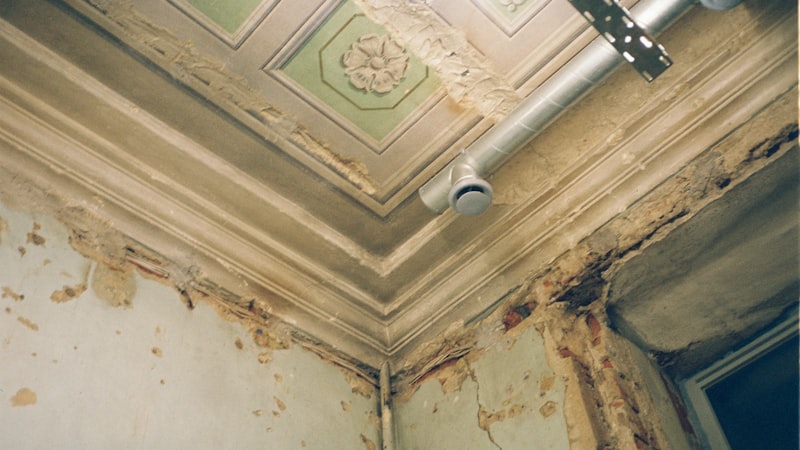
Why are Wandsworth terraces so prone to damp?
Wandsworth terraces are prone to damp because most were built between 1870 and 1910 with solid brick walls and lime mortar designed to breathe, and later alterations often trapped moisture inside them. When original lime plaster and porous pointing are replaced with cement render or gypsum, water that once evaporated freely gets held against the brick. Add shared party walls, retrofitted concrete floors, and modern airtight windows, and moisture has nowhere to go. The result is rising, penetrating, and condensation damp appearing across the same street in slightly different forms house to house.
What are the common signs of damp in a period terrace?
The most common signs are tide marks on ground-floor walls, flaking paint, and black mould in corners and behind furniture. In Wandsworth terraces, watch for these specifically:
- Tide marks or salt staining up to a metre high on ground-floor walls
- Bubbling, flaking, or blown plaster near skirting boards
- Black spot mould on cold external walls, window reveals, and ceiling corners
- A persistent musty smell in cellars, hallways, or bay windows
- Cold, damp patches on party walls shared with neighbours
- Peeling wallpaper and crumbling mortar in older extensions
Is it rising damp, penetrating damp, or condensation?
It is usually a combination, which is exactly why a professional diagnosis matters before any treatment. Rising damp comes up from the ground through a failed or bridged damp-proof course. Penetrating damp comes horizontally through defective render, pointing, roofs, or flashing. Condensation forms when warm, moist air meets cold surfaces in poorly ventilated rooms. Terraces frequently show all three at once, and misreading one for another wastes money on the wrong repair. A thorough Damp, Mould and Water Damage Assessment uses moisture meters, thermal readings, and physical inspection to separate the causes rather than guessing from surface symptoms alone.
Not sure what you're dealing with?
Send us a photo on WhatsApp. We'll tell you what it is, no charge, no obligation.
What does a Damp, Mould and Water Damage Assessment in Wandsworth involve?
A damp survey in Wandsworth involves a full inspection of every affected area, moisture and humidity readings, and a written report you can act on or hand to an insurer. Our process is straightforward:
- We inspect the interior and exterior, including cellars, party walls, and extensions where terraces typically hide problems.
- We take calibrated moisture readings and assess ventilation, drainage, and external defects.
- We diagnose each type of damp present and trace it to its actual source.
- We produce a full insurance-ready written report with a photographic evidence appendix, clear findings, and prioritised recommendations.
The report is designed so you know exactly what is wrong, what needs doing first, and why. Where mould has taken hold, our report also covers the ventilation and surface treatment needed for effective mould remediation.
How much does it cost to fix damp in a terrace?
The cost of remedial work depends entirely on what the survey finds. Factors that affect it include the type and extent of damp, whether the damp-proof course needs attention, the condition of external render and pointing, the state of gutters and flashing, and how much plaster must be removed and replaced. A house with isolated condensation needs far less work than one with widespread penetrating damp through a rear extension. This is why we never quote remedial figures before diagnosis: the report gives you an accurate, prioritised basis for planning and for gathering fair quotes.
I rent my terrace. What are my landlord’s obligations?
Your landlord is legally required to deal with damp and mould that affects your health or the safety of the property, and recent law has tightened those duties. Under Awaab’s Law, landlords in the social sector must investigate and address reported damp and mould within fixed timescales rather than leaving it unresolved. The Renters’ Rights Act strengthens tenants’ ability to demand action on hazards including damp. A clear, dated survey report gives a tenant firm evidence of the problem and its cause, and gives a responsible landlord the diagnosis needed to act quickly and correctly.
Frequently Asked Questions
How long does a Damp, Mould and Water Damage Assessment take?
Can you survey just one room or the whole house?
Do I get a report I can give to my insurer or landlord?
Do you carry out the repairs as well?
Arrange your Damp, Mould and Water Damage Assessment in Wandsworth
Damp & Mould Solutions UK carries out Damp, Mould and Water Damage Assessments across Wandsworth and throughout London, including Clapham, Battersea, Putney, Balham, and Tooting. Call us on 020 3051 8478 or send photos via WhatsApp for an initial view, and we will tell you honestly whether an assessment is the right next step for your terrace.
If you've got damp, mould, or a leak, you already know it needs sorting.
The longer it sits, the worse it gets. Get in touch and we will agree a date with you. If it is urgent, say so when you call.