

Is Black Mould Dangerous to Your Health?
Yes, black mould can harm your health, especially for vulnerable people, by releasing spores that trigger respiratory and allergic symptoms.
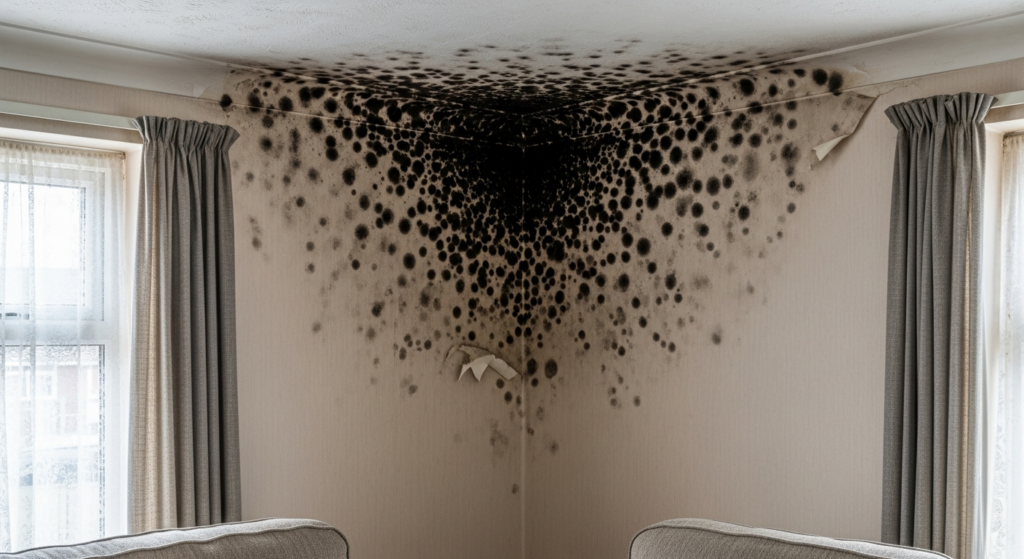
Black mould is more than an unsightly stain. It thrives on damp surfaces and constantly releases microscopic spores into the air. For most healthy adults the effect is mild irritation, but for vulnerable people the consequences can be serious. Below we explain the real risks, the warning signs to watch for, and exactly how to deal with it.
What health problems can black mould cause?
Black mould most commonly causes respiratory and allergic symptoms, ranging from a runny nose to severe asthma attacks. Exposure to airborne spores irritates the lungs, eyes, skin and throat. The severity depends on how long you are exposed, how large the affected area is, and your existing health.
- Persistent coughing, wheezing and shortness of breath
- Blocked or runny nose, sneezing and sinus congestion
- Sore throat and irritated, watery eyes
- Skin rashes and itching
- Worsening of asthma, eczema and existing allergies
- Headaches and a general feeling of being run down
People with compromised immune systems, chronic lung conditions or allergies face the highest risk, as do babies, young children and older adults. If symptoms ease when you leave the property and return when you come home, mould in the building is a likely cause.
How do I know if the black spots are dangerous mould?
You can identify problem black mould by its slimy or fuzzy texture, dark greenish-black colour and the musty, earthy smell that accompanies it. It typically appears in bathrooms, around windows, behind furniture on cold external walls, and in poorly ventilated corners. Not every dark mark is dangerous, so it is worth knowing the signs.
- Dark green to black patches that may look slimy or velvety
- A strong, persistent musty odour even after cleaning
- Spreading staining around window reveals, sealant and tiling
- Peeling wallpaper, flaking paint or crumbling plaster
- Condensation forming regularly on cold surfaces
A surface clean rarely solves the problem because the spores and root structure remain. A professional mould inspection identifies the type, extent and underlying cause so the issue is treated properly rather than masked.
Not sure what you're dealing with?
Send us a photo on WhatsApp. We'll tell you what it is, no charge, no obligation.
Is a small patch of black mould still a health risk?
Even a small patch of black mould can affect your health, particularly in a bedroom or any room where you spend long periods. Spores travel easily through the air and accumulate in soft furnishings, carpets and bedding. A patch the size of a hand can release enough spores to trigger symptoms in sensitive people.
Small patches also tend to spread quickly once moisture is present, so dealing with them early prevents both a larger problem and greater health risk. If you or anyone in the household has a respiratory condition, treat even minor growth as a priority.
How do I get rid of black mould safely?
The safest way to remove black mould is to address both the visible growth and the moisture feeding it, ideally with professional protective equipment and treatment. Disturbing mould releases a burst of spores, so DIY scrubbing can temporarily make air quality worse. Follow these steps:
- Stop the moisture source, such as a leak, condensation or rising damp
- Improve ventilation and keep affected rooms warm and dry
- Avoid disturbing large areas yourself, which spreads spores
- Book a professional survey to confirm the cause and extent
- Arrange proper remediation that treats the surface and the root cause
For lasting results, our mould remediation service removes the growth, treats the affected materials and tackles the damp that allowed it to form.
What does an inspection and removal cost?
We confirm the price on a written quote once we understand the problem. This includes a full assessment of the property and an insurance-ready written report with a photographic evidence appendix, so you have clear documentation of the problem and its cause.
Mould removal is quoted individually rather than charged at a fixed rate, because every room and cause differs. To get a quote, you send us a video of the whole affected room and we provide a fixed-price quote for the works. Works are paid 50% upfront and 50% on completion. Any emergency or out-of-hours work carries an additional cost, confirmed before we begin.
Is my landlord responsible for black mould?
In rented homes, landlords are generally responsible for fixing damp and mould caused by structural issues, disrepair or inadequate ventilation. Recent legislation has strengthened tenants’ rights significantly. Under Awaab’s Law, social landlords must investigate and address reported damp and mould hazards within strict timeframes, and the Renters’ Rights Act extends greater protection and accountability across the rental sector.
If you are a landlord, an insurance-ready survey report gives you the evidence needed to demonstrate prompt, responsible action. If you are a tenant, that same documentation supports your case when reporting a problem.
Frequently Asked Questions
Is all black mould toxic?
Can black mould make you seriously ill?
How quickly should black mould be removed?
Does cleaning black mould with bleach work?
How do I get a quote for mould removal?
If you've got damp, mould, or a leak, you already know it needs sorting.
The longer it sits, the worse it gets. Get in touch and we will agree a date with you. If it is urgent, say so when you call.