

Black Mould on the Ceiling: What Causes It and How to Treat It
Black mould on ceilings is a moisture problem caused by condensation or leaks, and lasting removal means fixing the source before you clean.
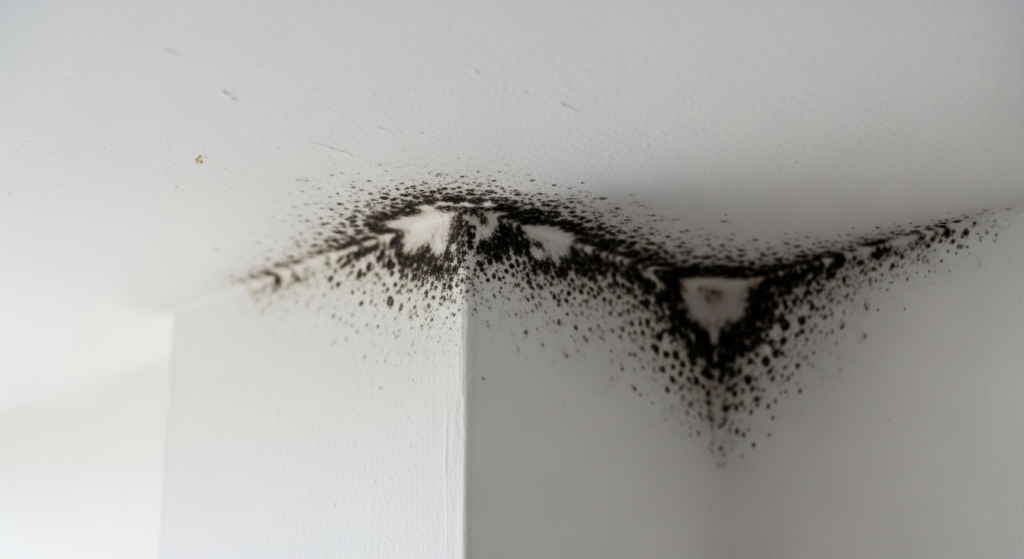
What causes black mould on a ceiling?
Black mould on a ceiling is almost always a moisture problem, not a cleaning problem. Mould spores are present in every home, but they only grow into visible black patches when they land on a damp, cool surface and stay wet long enough to colonise. Ceilings are common targets because warm, humid air rises and meets the coldest part of the room.
The usual sources are:
- Condensation: warm moist air from cooking, showering and drying clothes settling on cold ceiling plaster, especially in bathrooms and bedrooms.
- Roof or flashing leaks: water tracking in through damaged tiles, felt or lead flashing, leaving brown-edged stains before mould appears.
- Plumbing leaks: a slow drip from a bathroom or radiator pipe in the floor above.
- Poor ventilation: blocked or absent extractor fans, trickle vents painted shut, and rooms that are rarely aired.
- Cold spots and thermal bridging: uninsulated areas where the ceiling meets an external wall.
How do I know if it is condensation or a leak?
Condensation mould tends to spread evenly across the coldest zones, while a leak produces a defined stain with a damp centre. Knowing which you have decides the whole repair, so it is worth checking carefully before you reach for the cleaning spray.
Look for these signs:
- Mould in corners, around the ceiling perimeter or near the window: usually condensation.
- A brown or yellow watermark with a hard tide line that grows after rain: usually a roof or external leak.
- A wet patch directly under a bathroom or radiator above: usually a plumbing leak.
- Black speckling that wipes but returns within weeks: a persistent humidity problem.
- Bubbling, sagging or cracked plaster: prolonged water ingress that needs urgent attention.
Is black mould on the ceiling dangerous to health?
Black mould can affect health, particularly for people with asthma, allergies, weak immune systems, the very young and the elderly. The spores and the compounds they release can trigger coughing, wheezing, a blocked or runny nose, itchy eyes and skin irritation, and they can worsen existing respiratory conditions.
Not sure what you're dealing with?
Send us a photo on WhatsApp. We'll tell you what it is, no charge, no obligation.
A small patch the size of a hand is usually safe to clean yourself with the right protection. Larger areas, mould that keeps returning, or any growth linked to a leak should be assessed professionally, because the visible patch is often smaller than the affected area behind the plaster.
How do I treat and remove black mould on a ceiling?
Treat black mould by fixing the moisture source first, then cleaning the surface, because cleaning alone without removing the cause simply resets the clock. Follow this order.
- Find and stop the moisture. Repair the leak, unblock the extractor fan or reduce humidity. Mould treated over a live leak always comes back.
- Protect yourself. Wear a fitted FFP2 or FFP3 mask, gloves and eye protection, and open a window for airflow.
- Apply a proper mould treatment. Use a dedicated fungicidal wash rather than just bleach, which often only lightens the colour while leaving roots in porous plaster.
- Wipe gently, do not scrub dry. Dampen the area so spores are not flung into the air, then remove the growth and dispose of cloths in a sealed bag.
- Dry the ceiling fully. Allow it to dry before any redecoration.
- Redecorate with a mould-resistant finish once the surface is clean and dry and the source is fixed.
How do I stop black mould coming back on the ceiling?
Stopping black mould returning depends on keeping the ceiling warmer and the air drier, so condensation no longer forms. Once the cause is fixed, prevention is mostly about managing moisture day to day.
- Run an extractor fan during and after showers and cooking, and have weak or noisy fans replaced.
- Keep trickle vents open and air rooms daily, even briefly in winter.
- Dry laundry outdoors or in a ventilated room with a dehumidifier, never on radiators in a closed bedroom.
- Keep heating steady and gentle rather than letting rooms swing cold then warm.
- Improve loft and ceiling insulation to remove the cold spots where moisture settles.
If you have done all of this and the mould persists, the problem is structural, and a professional Damp, Mould and Water Damage Assessment will pinpoint exactly where the water is coming from.
Arrange your Damp, Mould and Water Damage Assessment with Damp & Mould Solutions UK
Damp & Mould Solutions UK carry out Damp, Mould and Water Damage Assessments across the UK, including London boroughs such as Camden, Islington, Hackney, Wandsworth, Lambeth, Southwark, Richmond, Ealing and the surrounding boroughs. We confirm the price on a written quote once we understand the problem. Our Damp, Mould and Water Damage Assessment (what many people call a damp survey) includes a full insurance-ready written report with a photographic evidence appendix, clear findings and prioritised recommendations. Call 020 3051 8478 or send photos via WhatsApp for an initial view.
Frequently Asked Questions
Can I just paint over black mould on the ceiling?
Why does black mould keep coming back after I clean it?
Does bleach kill black mould on ceilings?
How quickly should I deal with black mould on a ceiling?
Will a survey tell me where the water is coming from?
If you've got damp, mould, or a leak, you already know it needs sorting.
The longer it sits, the worse it gets. Get in touch and we will agree a date with you. If it is urgent, say so when you call.