

Black Mould Around Windows: Causes and How to Stop It Returning
Black mould around windows is almost always condensation, not a leak. Here is what causes it and how to stop it returning for good.
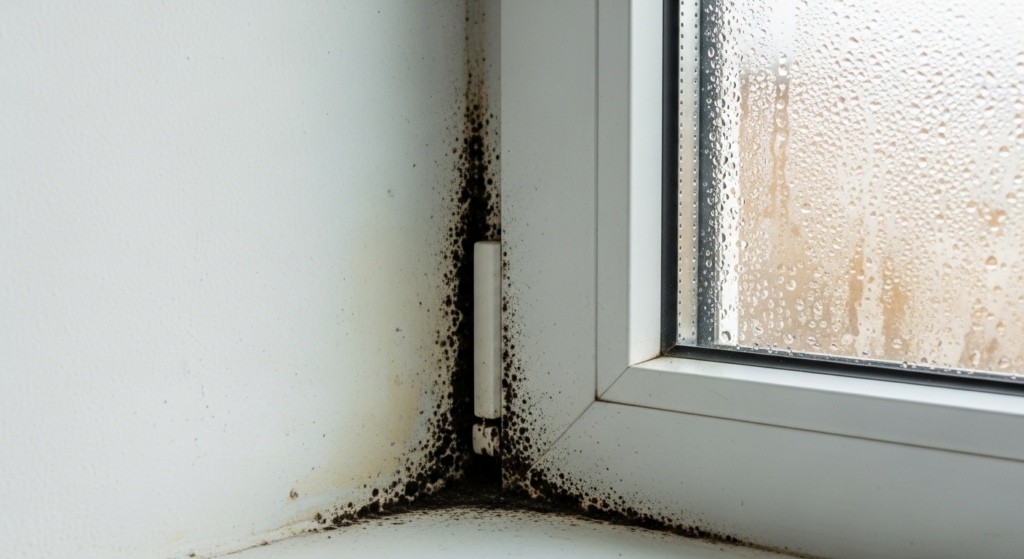
Why is there black mould by my window?
Black mould by a window is the visible result of condensation settling on the coldest surfaces in the room. Glass, metal spacer bars and window frames are usually the coldest points, so moisture in warm indoor air condenses there first. That persistent dampness on sealant, plaster reveals and timber gives mould spores everything they need to colonise and spread.
Everyday activities add far more moisture to the air than people realise. Cooking, showering, drying laundry indoors and even breathing release litres of water vapour each day. When ventilation is poor and surfaces are cold, that vapour has nowhere to go except onto your windows.
What are the signs it is condensation rather than a leak?
Condensation mould shows a recognisable pattern: it clusters tightly around the coldest edges of the window and worsens in winter.
- Water droplets or misting on the glass, especially on cold mornings
- Black spotting concentrated on sealant, the bottom corners and the frame
- Mould that wipes off the surface but keeps returning
- The problem peaks in colder months and eases in summer
- Multiple windows affected across the property, not just one
By contrast, a leak or penetrating damp tends to affect a single location, produces brown tide marks, and persists or worsens during heavy rain regardless of the season. A proper Damp, Mould and Water Damage Assessment confirms which mechanism is at work before any money is spent on remedial work.
Not sure what you're dealing with?
Send us a photo on WhatsApp. We'll tell you what it is, no charge, no obligation.
How do I get rid of black mould around windows?
You can remove surface mould safely yourself, but only after you understand and address the cause, otherwise it returns within weeks.
- Ventilate the room and wear gloves and a mask before you start.
- Wipe affected surfaces with a dedicated mould remover or a fungicidal wash, following the product instructions.
- Avoid dry brushing, which sends spores into the air.
- Dispose of cloths and wipes rather than reusing them.
- Dry the area thoroughly and check sealant for gaps that trap moisture.
Cleaning treats the symptom, not the source. Where mould is extensive, has penetrated plaster, or keeps coming back, professional mould remediation deals with the contamination properly and lasts.
How do I stop black mould by the window coming back?
You stop it returning by tackling the three drivers together: too much moisture, too little ventilation and cold surfaces. Address one in isolation and the problem usually creeps back.
- Reduce moisture at source: cover pans when cooking, dry laundry outside or in a vented space, and close bathroom and kitchen doors when in use.
- Improve ventilation: use extractor fans, open trickle vents and air rooms daily.
- Reduce cold spots: keep heating steady rather than letting rooms swing between hot and freezing, and consider how insulation and window performance affect surface temperatures.
- Wipe down window condensation each morning during winter until the cause is corrected.
The most stubborn cases involve a combination of factors, sometimes including building defects that are not obvious to the eye. That is where a structured survey earns its place.
When should I get a professional Damp, Mould and Water Damage Assessment?
Get a survey when the mould keeps returning despite cleaning, spreads beyond the window, or you need clear written evidence for a landlord, insurer or sale. We confirm the price on a written quote once we understand the problem. Our Damp, Mould and Water Damage Assessment (what many people call a damp survey) removes the guesswork.
The survey produces a full insurance-ready written report with a photographic evidence appendix, clear findings and prioritised recommendations, so you know exactly what is driving the problem and what to do about it in order of importance. Costs for any remedial work that follows depend on the cause, the extent of the affected area, access and the materials involved, which the report sets out in plain terms without committing you to anything.
Arrange your Damp, Mould and Water Damage Assessment
Damp & Mould Solutions UK carries out Damp, Mould and Water Damage Assessments across the UK, including central, north, south, east and west London and the surrounding boroughs. If black mould keeps returning around your windows, call us on 020 3051 8478 or send photos via WhatsApp for an initial view before you commit to a full survey.
Frequently Asked Questions
Is black mould around windows dangerous?
Why does mould keep coming back on my window even after cleaning?
Can new double glazing cause more condensation?
Does a survey include a written report?
If you've got damp, mould, or a leak, you already know it needs sorting.
The longer it sits, the worse it gets. Get in touch and we will agree a date with you. If it is urgent, say so when you call.