

Why Riverside Homes in Greenwich Struggle With Damp
Riverside Greenwich homes struggle with damp due to Thames groundwater, tidal moisture and older solid-wall construction, and a Damp, Mould and Water Damage Assessment pinpoints the cause.
Why does living near the Thames cause damp problems?
Living near the Thames raises the moisture load on a building from every direction, which is why riverside Greenwich homes see more damp than properties further inland. High groundwater levels near the river keep the soil around foundations saturated, while tidal cycles push moisture through the ground twice a day. Add the humid air that sits over the water, and the walls, floors and cellars of these homes rarely get a chance to dry fully. The result is a combination of rising damp from below, penetrating damp through walls, and condensation from the surrounding air.
What types of damp affect Greenwich riverside homes?
Three types of damp affect Greenwich riverside homes, and they often occur together. Distinguishing between them is the single most important step, because the wrong diagnosis leads to wasted money and recurring problems.
- Rising damp: groundwater drawn up through porous masonry where a damp-proof course is absent, failed or bridged.
- Penetrating damp: water passing horizontally through solid walls, defective pointing, or around windows during driving rain off the river.
- Condensation: humid riverside air meeting cold internal surfaces, feeding black mould in corners, behind furniture and on window reveals.
A proper Damp, Mould and Water Damage Assessment uses moisture readings, surface temperatures and construction knowledge to separate these causes rather than guessing.
Not sure what you're dealing with?
Send us a photo on WhatsApp. We'll tell you what it is, no charge, no obligation.
Why are older Greenwich properties more vulnerable?
Older Greenwich properties are more vulnerable because they were built with solid walls and no cavity, so there is no air gap to stop water crossing to the inside. Many Victorian and Georgian riverside homes have solid brick construction, original lime mortar that has weathered, and damp-proof courses that were either never fitted or have broken down over a century of use. Later works can make things worse: cement renders, modern impermeable paints and raised external ground levels all trap moisture in walls that were designed to breathe. When a breathable building is sealed with the wrong materials, damp has nowhere to escape and shows up internally as staining, salts and peeling plaster.
What are the warning signs of damp in a riverside home?
The warning signs of damp in a riverside home usually appear at low level on walls and in poorly ventilated rooms. Catching them early prevents damage to plaster, timber and decoration.
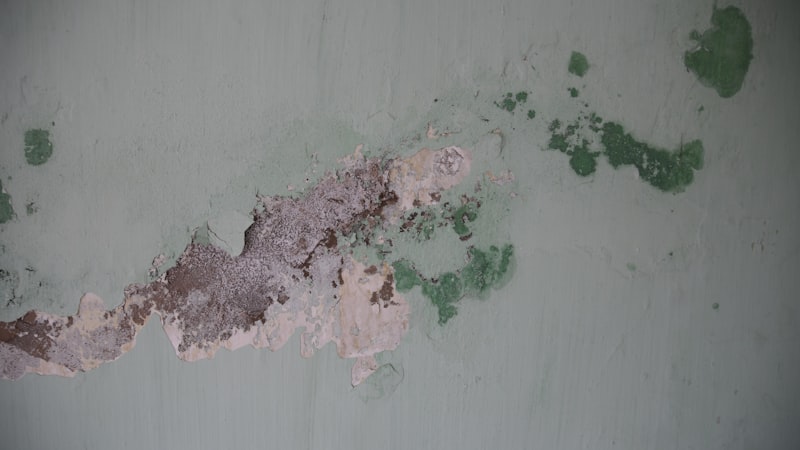
- Tide marks or yellow-brown staining up to a metre above skirting level
- Salt deposits (a white, fluffy or crystalline bloom) on plaster
- Peeling paint, bubbling wallpaper or crumbling plaster
- Black mould in corners, on ceilings and behind furniture
- A persistent musty smell, especially in ground-floor rooms and cellars
- Cold, damp-feeling walls and misted windows
- Rotting or spongy skirting boards and floor timbers
If mould has already taken hold, professional mould remediation alongside fixing the moisture source stops it returning.
How does a damp survey in Greenwich diagnose the problem?
A damp survey in Greenwich diagnoses the problem by measuring moisture across the building and identifying exactly which mechanism is at work before any remedial work is specified. The process is systematic:
- Inspect the external envelope, ground levels, pointing and drainage around the property.
- Take moisture readings across affected walls, floors and timbers.
- Assess ventilation, heating and internal humidity for condensation risk.
- Separate rising, penetrating and condensation causes based on the evidence.
- Produce a full insurance-ready written report with a photographic evidence appendix, clear findings and prioritised recommendations.
We confirm the price on a written quote once we understand the problem. That report gives you a defensible record of the condition of the property, what is causing the damp, and the order in which to tackle it, so you can act with confidence rather than react to symptoms.
What affects the cost of fixing damp in a riverside home?
The cost of fixing damp in a riverside home depends on the cause, the extent, and how the building is constructed, so no honest figure can be given before a survey. Rising damp affecting a long run of solid wall demands more work than an isolated area of penetrating damp. The type of construction matters, because breathable lime systems, tanking and damp-proofing all differ in scope. Access, the level of internal finishes affected, and whether timbers or plaster need replacing all influence the eventual price. This is precisely why the survey comes first: it defines the problem accurately so any spend is targeted and effective.
Frequently Asked Questions
Is damp in Greenwich riverside homes always rising damp?
How much does a Damp, Mould and Water Damage Assessment in Greenwich cost?
Can condensation really be a problem so close to the water?
Will sealing my walls stop the damp?
How quickly can you assess my property?
Arrange your Damp, Mould and Water Damage Assessment in Greenwich
Damp & Mould Solutions UK carries out Damp, Mould and Water Damage Assessments across Greenwich and throughout London, including Blackheath, Deptford, Lewisham, Woolwich and the wider South East and Central London area. Call us on 020 3051 8478 or send photos via WhatsApp for an initial view, and we will advise on the right next step for your riverside home.
If you've got damp, mould, or a leak, you already know it needs sorting.
The longer it sits, the worse it gets. Get in touch and we will agree a date with you. If it is urgent, say so when you call.