

What Does a Damp Survey Actually Involve?
A damp survey diagnoses the type, source and extent of damp or mould in a property and sets out the correct fix in a written report.
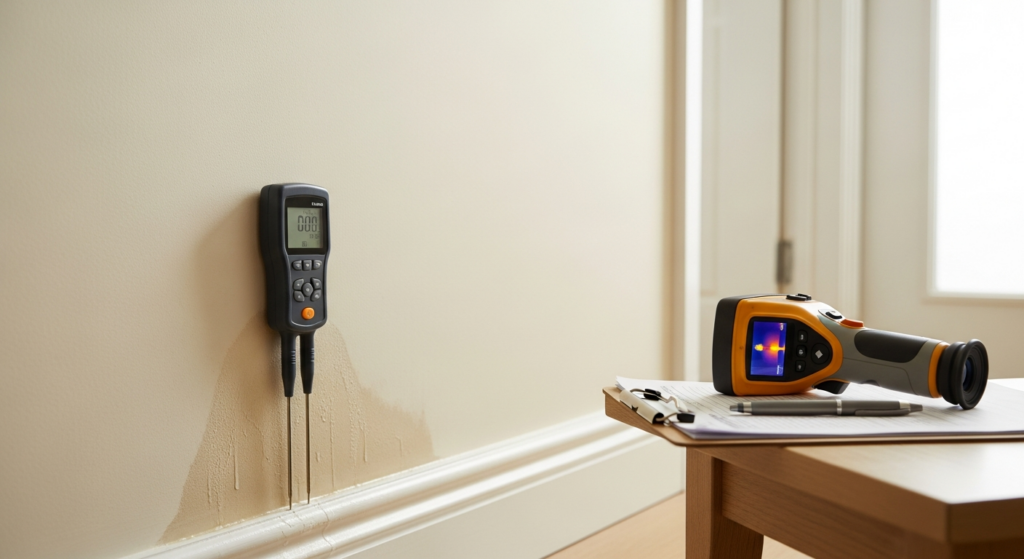
Damp is rarely random. There is almost always a clear cause: a failed seal, a bridged cavity, condensation from poor ventilation, or water tracking in from outside. A proper survey finds that cause rather than treating the symptom, which is why a quick visual glance and a moisture-meter reading are not enough.
What does a Damp, Mould and Water Damage Assessment actually involve?
A damp survey involves a trained surveyor inspecting the affected areas and the wider property to diagnose the type of damp, locate its source and recommend the correct fix. The work combines visual inspection, moisture readings and an assessment of how the building behaves as a whole.
A thorough survey typically covers:
- Internal and external inspection of walls, floors, skirtings and ceilings
- Moisture-meter and where needed deep-probe readings to map dampness
- Assessment of ventilation, heating and condensation risk
- Checks on guttering, downpipes, ground levels and external defects
- Inspection of any existing damp-proofing and its condition
- A full insurance-ready report with a photographic evidence appendix explaining cause, extent and recommended remedy
The aim is a diagnosis you can act on, not a sales pitch for a single treatment. Our Damp, Mould and Water Damage Assessment service follows this structured approach on every visit.
Not sure what you're dealing with?
Send us a photo on WhatsApp. We'll tell you what it is, no charge, no obligation.
What are the different types of damp a survey identifies?
A survey distinguishes between the three main types of damp, because each has a different cause and a different fix. Treating one as another wastes money and leaves the real problem untouched.
- Condensation: moisture from daily living that settles on cold surfaces, usually linked to ventilation and heating, and the most common cause of mould.
- Penetrating damp: water entering from outside through defects such as cracked render, faulty pointing, leaking gutters or bridged cavities.
- Rising damp: ground moisture rising through walls where a damp-proof course is absent, failed or bridged. Genuine rising damp is far less common than it is often diagnosed.
What are the signs you need a damp survey?
You need a damp survey when you can see, smell or feel persistent moisture that does not clear on its own. The earlier you investigate, the smaller the eventual repair.
- Black mould on walls, ceilings, sealant or around windows
- A musty, earthy smell that lingers in a room
- Peeling paint, bubbling plaster or lifting wallpaper
- Tide marks or staining low on walls
- Damp or cold patches that feel wet to the touch
- Condensation streaming on windows and steamed-up glass
- Rotting or soft skirting boards and window frames
If mould is the visible problem, a focused mould inspection will confirm whether it is driven by condensation, a leak or a structural defect.
How long does a Damp, Mould and Water Damage Assessment take and what do you get?
A damp survey usually takes between one and two hours on site, depending on the size of the property and the number of affected areas. You then receive a full insurance-ready report with a photographic evidence appendix, normally within 3 to 5 working days.
The report sets out what was found, the cause of the damp, photographs of the evidence, and clear recommendations for putting it right. With Damp & Mould Solutions UK the written report is included, so there are no surprises on the day.
How much does fixing damp cost after the survey?
The cost of remedial work depends entirely on what the survey finds, which is exactly why the survey comes first. There is no honest single figure before the cause is known.
Factors that affect the cost of repairs include:
- The type of damp and how far it has spread
- Whether the cause is a simple seal or a larger structural defect
- The amount of replastering, redecoration or timber replacement needed
- Access, scaffolding and the age and construction of the property
- Whether ventilation improvements are required to prevent recurrence
A precise written diagnosis means any later work is targeted, so you are not paying for treatments your property does not need.
Do landlords need a damp survey?
Yes. Landlords increasingly need a damp survey to meet their legal duties and to evidence the condition of a property. A documented survey protects both tenant and landlord by recording the cause and the action taken.
Under the Renters’ Rights Act and the extension of Awaab’s Law, landlords face firmer timescales for investigating and addressing damp and mould hazards once reported. A clear written survey gives you the diagnosis and the paper trail needed to respond properly and on time.
Arrange your Damp, Mould and Water Damage Assessment with Damp & Mould Solutions UK
Damp & Mould Solutions UK carries out Damp, Mould and Water Damage Assessments across the UK, including central, north, south, east and west London and the surrounding boroughs. For a clear diagnosis and a full insurance-ready report with a photographic evidence appendix, call us on 020 3051 8478 or send photos via WhatsApp for an initial view of your problem.
Frequently Asked Questions
How much does a Damp, Mould and Water Damage Assessment cost?
How long does a Damp, Mould and Water Damage Assessment take?
Is condensation the same as damp?
Can I get an idea of the problem before a full survey?
If you've got damp, mould, or a leak, you already know it needs sorting.
The longer it sits, the worse it gets. Get in touch and we will agree a date with you. If it is urgent, say so when you call.