

Why Does Mould Keep Coming Back After I Clean It?
Mould keeps returning after cleaning because the moisture source remains. Here is why it happens and how to fix it for good.
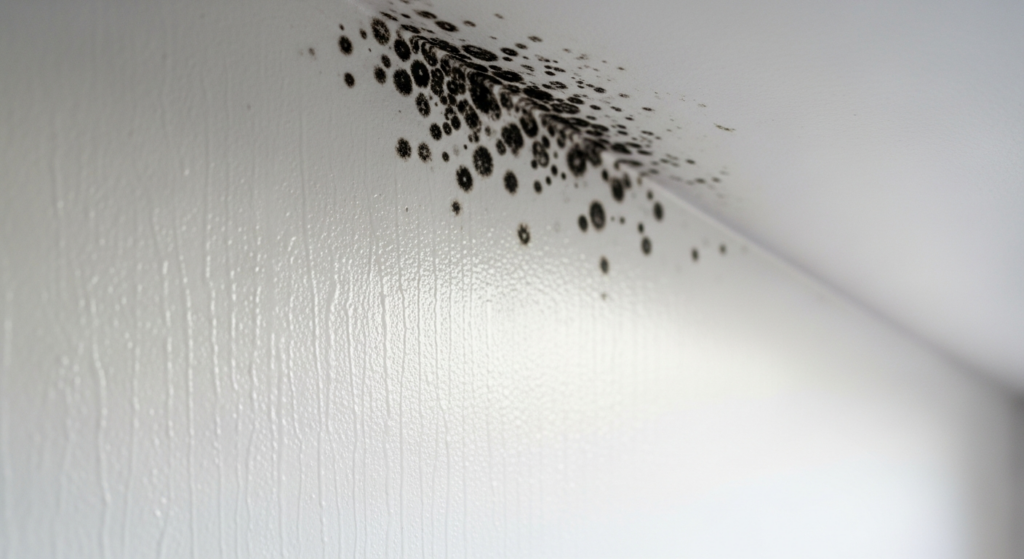
Why does mould return even after I scrub it off?
Because cleaning treats the symptom, not the cause. Mould needs three things to grow: spores (always present in the air), a food source (plaster, paint, dust, timber) and moisture. You can remove the visible patch, but the spores and the food source remain, so the only variable you control by cleaning is moisture, and a quick wipe does nothing to fix where that water is coming from.
If a wall stays damp from condensation or a hidden leak, the surface re-colonises quickly. This is why the same corner, window reveal or ceiling patch keeps reappearing in exactly the same spot.
What are the common moisture sources behind recurring mould?
There are four main culprits, and identifying the right one is the whole job. Recurring black mould, especially around windows and in cold corners, is usually condensation, but it is not always that simple.
- Condensation: warm, moist indoor air meeting cold surfaces, common in bathrooms, kitchens and behind furniture on external walls.
- Penetrating damp: water entering through defective pointing, render, roofs or window seals, often leaving localised damp patches.
- Rising damp: ground moisture travelling up through walls where a damp-proof course is missing, bridged or failed.
- Plumbing or roof leaks: slow, hidden leaks that keep a concealed area permanently wet.
Each of these needs a different remedy, which is why a generic mould spray rarely solves anything for more than a few weeks. A proper mould inspection establishes which mechanism is actually at work before any treatment is recommended.
Not sure what you're dealing with?
Send us a photo on WhatsApp. We'll tell you what it is, no charge, no obligation.
How can I tell if it is condensation or something more serious?
Look at where, when and how the mould appears. Condensation mould tends to be seasonal (worse in winter), spread across cold surfaces, and accompanied by streaming windows. Penetrating or rising damp and leaks behave differently.
- Mould concentrated in one patch rather than across cold corners suggests a leak or penetrating damp.
- A tide mark or salting low on the wall points towards rising damp.
- Staining on a ceiling or high on a wall usually indicates a roof or plumbing issue.
- A persistent musty smell with no visible mould suggests moisture in a concealed void.
These signs narrow it down, but visual clues alone can mislead. Moisture readings, thermal observations and a structured Damp, Mould and Water Damage Assessment remove the guesswork and confirm the source rather than assuming it.
Will better ventilation stop mould from coming back?
Often yes, if condensation is the genuine cause, but only if the ventilation actually matches how the room is used. Many homes have extractor fans that are underpowered, blocked, or never switched on, so moisture from cooking, showering and drying clothes has nowhere to go.
Practical measures that reduce condensation include using extractor fans during and after showering and cooking, keeping trickle vents open, avoiding drying washing on radiators, and leaving gaps behind furniture on external walls. If the problem is penetrating or rising damp or a leak, however, ventilation alone will not fix it, because you are not dealing with airborne moisture.
How do I get rid of mould permanently?
Permanently solving mould means finding and fixing the moisture source, not repeating the cleaning cycle. The reliable sequence is:
- Identify the moisture mechanism through a proper survey, not a visual guess.
- Fix the cause: repair the leak, address ventilation, treat rising damp or resolve penetrating damp.
- Allow the affected fabric to dry out fully.
- Remove and redecorate the affected surfaces once they are dry.
- Monitor the area to confirm the problem does not return.
We confirm the price on a written quote once we understand the problem. Our Damp, Mould and Water Damage Assessment (what many people call a damp survey) includes a full insurance-ready report with a photographic evidence appendix that sets out the cause, the evidence and the recommended remedial approach. The cost of any remedial work afterwards depends on the source, the extent of affected materials and the access required, which is why we diagnose first and quantify the right fix rather than guessing.
Arrange your Damp, Mould and Water Damage Assessment
Damp & Mould Solutions UK carries out detailed Damp, Mould and Water Damage Assessments across the UK, including central, north, south, east and west London boroughs. If your mould keeps coming back and you want the cause identified properly, call us on 020 3051 8478 or send photos via WhatsApp for an initial view before we attend.
Frequently Asked Questions
How quickly does mould come back after cleaning?
Does bleach kill mould for good?
Can recurring mould damage my health or home?
Do I really need a survey, or can I just treat it myself?
If you've got damp, mould, or a leak, you already know it needs sorting.
The longer it sits, the worse it gets. Get in touch and we will agree a date with you. If it is urgent, say so when you call.