

Signs of Rising Damp You Should Never Ignore
Rising damp shows as a horizontal tide mark, salt deposits, soft skirting and a musty smell, and ignoring it turns a simple fix into costly repairs.
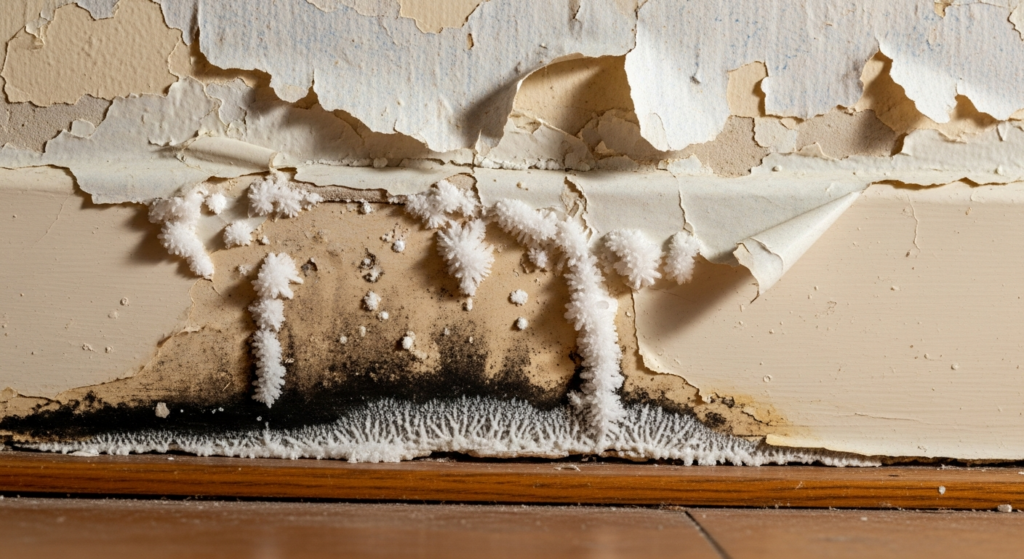
Rising damp has a reputation for being dramatic, but in most homes it arrives quietly. A faint tide mark above the skirting, a patch of flaking paint, a cold corner that never quite dries. Because these signs are so easy to explain away, rising damp is one of the most commonly ignored problems in older properties, and the longer it sits unaddressed, the more it costs to put right. Knowing what to look for early is the difference between a straightforward fix and months of disruption.
What is rising damp actually?
Rising damp is groundwater drawn up through the base of a wall by capillary action, the same effect that pulls water up through a sponge. In a healthy property a physical or chemical damp proof course blocks this moisture near ground level. When that barrier fails, gets bridged by raised external ground, or was never present in an older building, water travels upward through the masonry, carrying ground salts with it. It rarely climbs more than a metre or so, which is one of the clearest ways to tell it apart from other damp problems.
What are the warning signs you should never ignore?
The clearest warning signs are a horizontal tide mark near the floor, salt deposits and soft skirting, and noticing several of them together is worth taking seriously. Look out for the following:
- A horizontal tide mark, often yellow or brown, running along the wall up to around a metre from the floor
- White, fluffy salt deposits on the plaster, sometimes gritty to the touch
- Skirting boards that feel soft, are lifting, or show signs of rot
- Wallpaper peeling away from the bottom upward
- A persistent musty smell that does not shift with ventilation
- Cold, damp patches near the floor that never fully dry, even in summer
What is rising damp often mistaken for?
Rising damp is most often mistaken for condensation, along with poor decorating, an old carpet or simply the weather. Its early signs overlap with far less serious issues, so peeling paint gets blamed on bad decorating, a musty smell on an old carpet, and a cold corner on the cold outside. Condensation is the usual scapegoat, and while it is far more common, the two need very different solutions. Treating rising damp as if it were condensation, by simply wiping walls and opening windows, never works, because the water is coming from the ground, not the air. A proper Damp, Mould and Water Damage Assessment is the only reliable way to tell them apart.
Not sure what you're dealing with?
Send us a photo on WhatsApp. We'll tell you what it is, no charge, no obligation.
What happens if you leave rising damp untreated?
Ignored rising damp spreads and what starts as a cosmetic blemish can quietly turn into a structural job. The salts it carries are hygroscopic, meaning they keep attracting moisture long after the original source is dealt with, which is why botched repairs so often fail. Over time you can expect:
- Plaster that blows and crumbles, needing to be hacked off and replaced
- Rotting skirting, floor joists and any timber in contact with the wet wall
- Mould growth on the damp surfaces, with the air quality concerns that brings
- Higher heating bills, because wet walls lose heat far faster than dry ones
Acting while the signs are still mild keeps both the work and the bill contained.
How does a survey confirm rising damp?
A surveyor confirms rising damp by reading the moisture profile of the wall from floor to head height, rather than guessing. The process follows a clear order:
- Check the moisture profile of the wall and look for the tell-tale salt band
- Inspect external ground levels and the condition of any damp proof course
- Rule out plumbing or roof leaks that can mimic the same symptoms
- Confirm the actual source, then specify the right repair
Only once the source is confirmed can the correct treatment be specified, whether that is a new damp proof course, lowering bridged ground levels, or replastering with a salt resistant system. We confirm the price on a written quote once we understand the problem. Our Damp, Mould and Water Damage Assessment (what many people call a damp survey) includes a full insurance-ready report with a photographic evidence appendix. Diagnosis first, treatment second, always.
What does fixing rising damp cost in London?
The assessment to confirm the source includes a full insurance-ready report with a photographic evidence appendix, and that report keeps any remedial spending well targeted. The cost of the repair itself varies and cannot be quoted accurately until the source is confirmed. The main factors that affect it are the size and number of affected walls, how accessible they are, the extent of damage to plaster and timber, and whether external ground levels need lowering as well as treating the wall. A clear survey first means you only pay for the work the property actually needs.
Arrange your Damp, Mould and Water Damage Assessment
If you have spotted a tide mark, soft skirting or a musty smell that will not lift, do not wait for it to spread. Damp & Mould Solutions UK carries out Damp, Mould and Water Damage Assessments across the UK, including London and the surrounding areas, identifying exactly what is causing the problem and what it will take to fix it for good. Call us on 020 3051 8478 or send a few photos over WhatsApp for an initial view, and we will tell you honestly what you are dealing with.
Frequently Asked Questions
How high does rising damp usually go up a wall?
Can I treat rising damp myself?
How do I tell rising damp from condensation?
Does rising damp affect my heating bills?
How long does a rising damp survey take?
If you've got damp, mould, or a leak, you already know it needs sorting.
The longer it sits, the worse it gets. Get in touch and we will agree a date with you. If it is urgent, say so when you call.