

Is It Damp or Condensation? How to Tell the Difference
Learn how to tell damp from condensation using the location, pattern and feel of the moisture, plus what a survey and treatment cost.
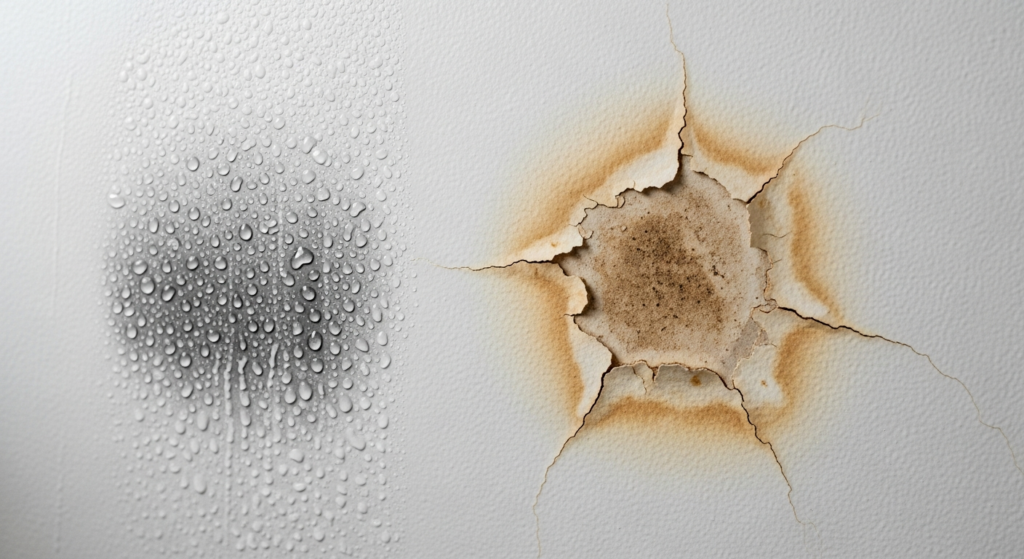
What is the difference between damp and condensation?
The core difference is the source of the water: condensation is airborne moisture settling on cold surfaces, while damp is liquid water entering the building fabric. Condensation appears where warm, moist air hits the coldest spots, typically windows, external corners, behind wardrobes and in poorly ventilated bathrooms and kitchens. Damp, by contrast, follows a leak path or rises from the ground, so it stays in one defined area and feels genuinely wet rather than misty. Understanding this distinction matters because the fixes are completely different: condensation is about heating, ventilation and humidity, whereas damp needs the water source found and stopped.
How can I tell if it is condensation?
Condensation is the likeliest cause if the moisture appears on cold surfaces and worsens in winter or after cooking, showering or drying laundry indoors. Look for these signs:
- Water droplets or misting on window glass and frames in the morning
- Black spotty mould in room corners, on ceilings and behind furniture against external walls
- A musty smell in rooms with poor airflow
- Damp that comes and goes with the weather and your daily routine
- Peeling wallpaper or mould on the cold side of the room rather than at floor level
How do I know if it is real damp?
It is most likely genuine damp if the affected area stays wet regardless of ventilation and shows a clear water pattern. Penetrating damp, rising damp and plumbing leaks each leave distinctive marks:
- A horizontal tide mark up to roughly a metre above the skirting suggests rising damp
- Localised patches on a wall after heavy rain point to penetrating damp through cracked render or failed pointing
- Salts crystallising on the plaster surface (a white fluffy deposit)
- Crumbling or blown plaster and rotting skirting boards
- A patch that is always wet, even in dry warm weather, often signals a leak
Because these causes overlap and can occur together, a professional Damp, Mould and Water Damage Assessment uses moisture meters and a trained eye to confirm the true source rather than guessing.
Not sure what you're dealing with?
Send us a photo on WhatsApp. We'll tell you what it is, no charge, no obligation.
Why does it matter which one I have?
It matters because treating the wrong problem wastes money and lets the real issue spread. Painting over condensation mould without improving ventilation simply delays its return, while installing extractor fans will never cure a leaking gutter. Untreated damp damages plaster, timber and decoration, and the resulting mould can affect respiratory health. A correct diagnosis, supported by a proper mould inspection, lets you spend on the fix that actually works the first time.
What does a survey cost and how does treatment work?
We confirm the price on a written quote once we understand the problem. Our Damp, Mould and Water Damage Assessment (what many people call a damp survey) includes an insurance-ready written report with a photographic evidence appendix. That report sets out exactly what is causing the problem, whether condensation, damp or both, so you know precisely where you stand.
Remedial and treatment work is quoted separately rather than charged at a fixed rate, because every room and every cause is different. The process is simple:
- You send us a video showing the whole affected room and the problem areas
- We assess it and return a fixed-price quote for the work needed
- On acceptance, work is paid 50% upfront and 50% on completion
This keeps pricing transparent with no surprises. Note that emergency or out-of-hours work carries additional cost, so let us know if your situation is urgent.
What should landlords know about damp and condensation?
Landlords should treat damp and mould as a compliance priority, not a cosmetic complaint. Under Awaab’s Law, social landlords face strict timescales for investigating and fixing damp and mould hazards once reported, and the Renters’ Rights Act strengthens tenants’ ability to demand healthy, safe homes. Even where condensation is influenced by how a property is lived in, the landlord remains responsible for adequate ventilation, heating efficiency and a sound building fabric. A survey gives you a written, insurance-ready record showing you investigated promptly and acted on professional findings, which is valuable evidence if a dispute arises.
Arrange your Damp, Mould and Water Damage Assessment today
Damp & Mould Solutions UK carries out Damp, Mould and Water Damage Assessments, and quote-based remedial work across the UK, including central, north, south, east and west London boroughs and the surrounding areas. If you are unsure whether you are facing damp or condensation, call us on 020 3051 8478 or send photos of the affected room via WhatsApp and we will point you to the right next step.
Frequently Asked Questions
Can damp and condensation happen at the same time?
Does black mould always mean condensation?
How much does a Damp, Mould and Water Damage Assessment cost?
How is treatment work priced?
If you've got damp, mould, or a leak, you already know it needs sorting.
The longer it sits, the worse it gets. Get in touch and we will agree a date with you. If it is urgent, say so when you call.