

How Long Does Structural Drying Take After Water Damage?
Structural drying after water damage usually takes three to twelve weeks depending on materials, water volume and drying method, with metered testing confirming true dryness.
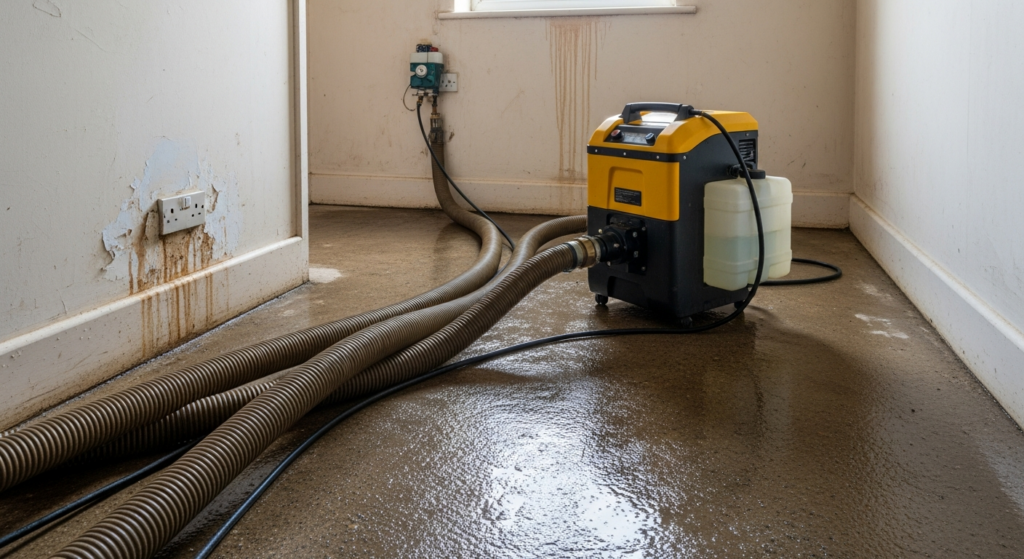
Water damage looks resolved long before it actually is. Surfaces feel dry to the touch while moisture remains trapped inside walls, floors and structural timber. Drying out properly matters because residual moisture leads to mould, rot and recurring damp. Below we explain realistic timeframes and what controls them.
How long does structural drying actually take?
Most structural drying takes between three and twelve weeks, though severe saturation of dense materials can extend beyond that.
The headline timeframe hides a wide range because not all building materials behave the same way. Plasterboard partitions and timber stud walls release moisture relatively quickly. Solid brick, stone, concrete screed and thick timber hold water deep within their structure and surrender it slowly. A surface that feels dry within a week may still hold significant moisture two months later.
What affects structural drying time?
Drying time is controlled by the type and volume of water, the materials affected, and the drying conditions applied.
Several factors push the timeline up or down:
- Material density: screed, concrete and solid masonry dry far slower than plasterboard or timber studwork.
- Volume of water: a contained leak dries faster than a flood that saturated floors and cavities.
- Water type: clean mains water is simpler than contaminated or sewage water, which adds decontamination before drying can finish.
- Drying equipment: professional dehumidifiers and air movers accelerate the process; passive drying is far slower.
- Ventilation and heat: stable, controlled conditions help; cold, sealed rooms hinder.
- Trapped moisture: water behind tiles, under floors or inside cavities can hide for weeks.
The actual cost of drying and repair depends on these same factors, particularly the scale of saturation and the materials involved. We do not quote remedial figures without inspecting the property, because guessing helps no one.
Not sure what you're dealing with?
Send us a photo on WhatsApp. We'll tell you what it is, no charge, no obligation.
How do you know when a property is fully dry?
A property is fully dry when moisture readings inside the structure return to normal levels for those materials, confirmed by metered testing rather than appearance.
Reaching a stable, dry baseline requires repeated readings over time, ideally using calibrated moisture meters and recorded measurements. This is where our structural drying assessment matters: we measure deep moisture content, identify where water remains, and confirm whether the structure has genuinely reached a safe level before any redecoration or reinstatement begins. Replastering or relaying floors over damp material simply traps the problem.
What happens if you redecorate before drying is complete?
Decorating before a structure is dry traps moisture, causing blown plaster, peeling paint, persistent damp patches and mould within weeks or months.
It is one of the most common and expensive mistakes after water damage. New plaster looks perfect, then a tide mark or bubbling appears, and the work has to be stripped and redone. Watch for these warning signs that drying was rushed:
- Recurring damp patches that return after redecoration
- Bubbling, flaking or blistering paint
- Salt deposits (a white powdery bloom) on walls
- Musty smells that linger in a room
- Black mould reappearing at skirting or corners
- Cold, clammy surfaces that never feel quite right
What are the steps to dry a property correctly?
Correct structural drying follows a clear sequence, from stopping the water source to confirming a dry baseline before repairs.
- Find and stop the source. Drying is pointless while water still enters. Accurate leak detection pinpoints the cause before anything else.
- Remove standing water and saturated materials that cannot be salvaged.
- Assess moisture levels across affected walls, floors and timber to establish a starting point.
- Apply controlled drying using appropriate equipment and conditions for the materials involved.
- Monitor with repeated readings until measurements confirm the structure has reached a dry, stable level.
- Reinstate and redecorate only once dryness is verified.
Why get a survey before claiming or repairing?
A survey gives you documented proof of the damage, its cause and its extent, which protects both your repairs and any insurance claim.
We confirm the price on a written quote once we understand the problem. Our Damp, Mould and Water Damage Assessment (what many people call a damp survey) gives you a full insurance-ready written report with a photographic evidence appendix, clear findings and prioritised recommendations. For water damage claims this matters enormously: insurers want evidence of cause and extent, and contractors need to know exactly what they are dealing with before they price the work. Our report sets out where moisture remains, what caused it, and what should happen in what order, so nothing is repaired prematurely or missed entirely.
Frequently Asked Questions
Can I speed up structural drying myself?
Does a dehumidifier alone dry a wall fully?
How soon should I act after water damage?
Will my insurer accept your survey report?
If you've got damp, mould, or a leak, you already know it needs sorting.
The longer it sits, the worse it gets. Get in touch and we will agree a date with you. If it is urgent, say so when you call.