

Black Mould on a Bathroom Ceiling: Causes and How to Remove It
Black mould on a bathroom ceiling is caused by condensation. Learn why it forms, how to remove it safely, and how to stop it returning.
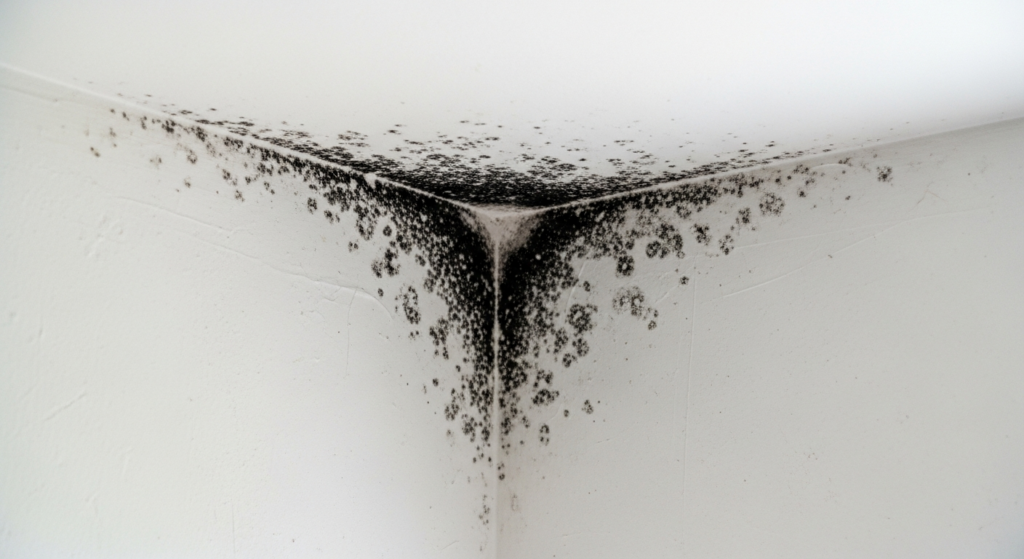
Why does black mould keep appearing on my bathroom ceiling?
Black mould on a bathroom ceiling almost always comes from condensation rather than a leak. Bathrooms produce large volumes of warm, moist air every time someone showers or bathes. That moisture rises and meets the ceiling, which is usually the coolest surface in the room, especially if there is an unheated loft or cold roof void directly above it.
When the warm air touches the cool plaster, it cools rapidly and releases water as condensation. This thin film of moisture, combined with poor air movement and any dust or residue on the surface, gives mould spores everything they need to germinate and spread. Common contributing factors include:
- No extractor fan, or a fan that is underpowered or broken
- Keeping the bathroom door closed with no trickle vents or airflow
- Poor or missing loft insulation above the ceiling, creating a cold spot
- Drying laundry in or near the bathroom
- Long, hot showers with the window kept shut
Is black mould on a bathroom ceiling dangerous to my health?
Black mould can affect health, particularly for vulnerable people, so it should not be ignored. The spores and the compounds mould releases can irritate the airways, trigger or worsen asthma, and cause coughing, wheezing, a blocked nose and itchy eyes. Infants, older adults, and anyone with a respiratory condition or weakened immune system are most at risk.
Most bathroom ceiling mould is surface mould caused by condensation, and a healthy adult dealing with a small patch is generally at low risk during cleaning. The concern grows with the size of the affected area and how long it has been left to develop. Persistent, spreading mould across a ceiling warrants proper investigation rather than repeated wiping.
Not sure what you're dealing with?
Send us a photo on WhatsApp. We'll tell you what it is, no charge, no obligation.
How do I remove black mould from a bathroom ceiling?
You can remove surface black mould from a bathroom ceiling yourself if the patch is small, using a fungicidal wash and proper protection. Follow these steps:
- Ventilate the room fully by opening the window and, if safe, running the extractor fan.
- Wear a fitted face mask (FFP2 or higher), gloves and eye protection, and cover surfaces below.
- Apply a proprietary fungicidal mould wash to the affected area. Do not dry-brush mould, as this releases spores into the air.
- Let the product dwell for the time stated on the label, then wipe gently with a disposable cloth.
- Dispose of cloths and protective items in a sealed bag.
- Allow the ceiling to dry completely, then consider a mould-resistant paint once clean and dry.
Avoid scrubbing aggressively, which can damage paint and plaster and spread spores. Bleach can lighten the stain but often leaves the root within porous plaster, which is why mould frequently returns. If the mould covers a large area or keeps coming back, professional mould remediation deals with it safely and thoroughly.
How do I stop black mould returning on my bathroom ceiling?
To stop black mould returning, you have to cut humidity and warm the cold surface so condensation can no longer form. Cleaning treats the symptom; ventilation and insulation treat the cause. Practical measures include:
- Fit or upgrade an extractor fan, ideally one with a humidity sensor and overrun timer
- Run the fan during and for 15 to 20 minutes after every shower
- Keep the bathroom door closed while bathing to contain moist air, then ventilate afterwards
- Improve loft insulation above the ceiling to raise the surface temperature
- Dry laundry elsewhere, or use a vented or condensing dryer
- Wipe down the ceiling and tiles after showering where practical
When should I get a professional Damp, Mould and Water Damage Assessment?
You should arrange a professional survey when the mould keeps returning, covers a large area, or you are unsure whether condensation or a leak is to blame. A surveyor measures humidity, surface temperatures and moisture readings to identify the true cause rather than guessing.
We confirm the price on a written quote once we understand the problem. Our Damp, Mould and Water Damage Assessment (what many people call a damp survey) includes a full insurance-ready report with a photographic evidence appendix setting out the cause, the extent, and the recommended remedy. The cost of any remedial work afterwards depends on factors such as the size of the affected area, whether ventilation or insulation needs upgrading, and whether a roof or plumbing fault is involved. Booking a mould inspection gives you a clear, evidenced plan before spending on works.
What if I rent and my landlord will not act on the mould?
If you rent, your landlord has legal duties to address damp and mould, and recent legislation has strengthened your position. Under the Renters’ Rights Act, protections for tenants reporting hazards have been reinforced, and Awaab’s Law sets out strict timeframes within which landlords in scope must investigate and fix reported damp and mould hazards.
Report the problem in writing with photos and keep a dated record. If your landlord fails to act, an evidenced survey report can document the cause and severity, which supports your case and clarifies who is responsible for what. A clear written report often prompts action where verbal complaints have not.
Frequently Asked Questions
Does bleach permanently kill black mould on a ceiling?
Can a bathroom leak cause ceiling mould instead of condensation?
Will painting over the mould get rid of it?
How long does it take for bathroom ceiling mould to come back?
If you've got damp, mould, or a leak, you already know it needs sorting.
The longer it sits, the worse it gets. Get in touch and we will agree a date with you. If it is urgent, say so when you call.