

Black Mould in the Shower: Why It Appears and How to Stop It
Black mould in showers comes from condensation and hidden leaks feeding spores in grout and silicone. Here is why it appears and how to stop it returning.
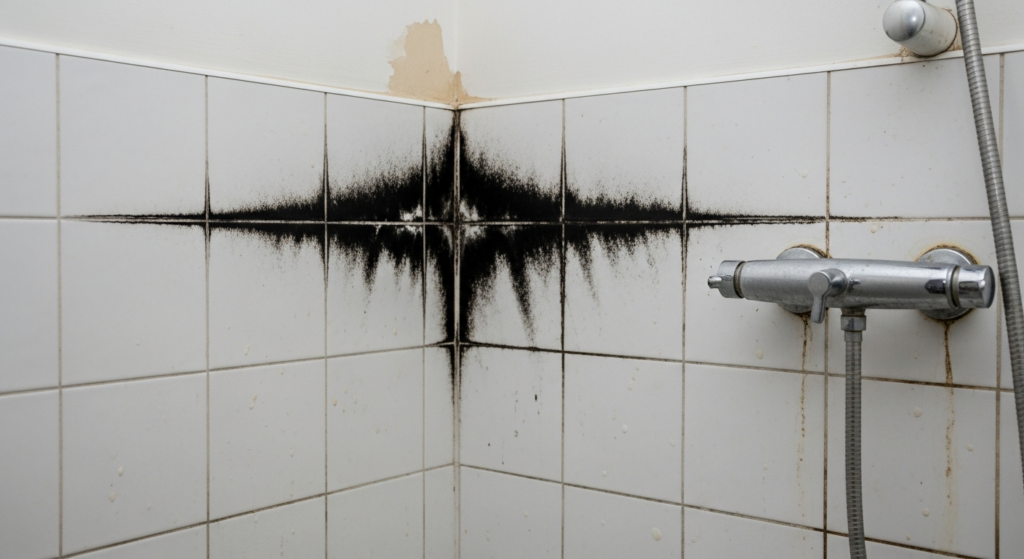
What causes black mould in showers?
Black mould in showers is caused by trapped moisture combined with poor ventilation, which lets airborne spores settle and multiply on damp surfaces. Every hot shower releases large volumes of water vapour. When that vapour cannot escape quickly, it condenses on cool tiles, grout, silicone and ceilings, creating the constant dampness mould needs to colonise.
The most common spots are the lower corners of the cubicle, the seal where the tray or bath meets the wall, and the grout lines that stay wet longest. Mould feeds on soap residue, skin cells and the organic content in some sealants, so a neglected shower offers an ideal environment.
Is black mould in the shower dangerous?
Black mould in the shower can affect health, particularly for people with asthma, allergies or weakened immune systems. The spores it releases irritate the airways and can trigger coughing, wheezing and congestion. While a small patch of surface mould on silicone is rarely an emergency, repeated or spreading growth should not be ignored.
The bigger concern is what the mould indicates. Persistent black mould often points to ongoing condensation or a concealed leak behind the tiling, which can quietly damage plaster, timber and adjoining rooms over time.
How do I get rid of black mould in the shower?
You remove black mould in the shower by cleaning affected surfaces, replacing contaminated sealant and then cutting off the moisture supply. Follow these steps in order:
- Ventilate the room and wear gloves and a mask before you start.
- Clean visible mould from tiles and grout using a dedicated mould treatment, not just bleach, which often only lightens the colour.
- Inspect the silicone seals. If mould has grown inside the sealant, cleaning will not work.
- Cut out and remove any blackened silicone completely.
- Allow the area to dry fully, then apply fresh mould-resistant sealant.
- Run the extractor fan during and after every shower, and wipe down surfaces daily.
If the mould keeps returning after this, the cause is structural or moisture related rather than cosmetic, and professional mould remediation is the sensible next step.
Not sure what you're dealing with?
Send us a photo on WhatsApp. We'll tell you what it is, no charge, no obligation.
What are the signs the problem is more than surface mould?
The clearest sign of a deeper problem is mould that returns quickly after a thorough clean and reseal. Watch for these warning signs:
- Damp patches or staining on the wall outside the shower or in an adjoining room.
- Bubbling, peeling or soft plaster near the cubicle.
- A persistent musty smell even when the shower is dry.
- Mould spreading across the ceiling rather than staying in the corners.
- Loose or hollow-sounding tiles.
- Water marks appearing on the ceiling below an upstairs bathroom.
These often indicate a hidden leak from pipework, the shower tray or failed waterproofing. In those cases, accurate leak detection finds the source without unnecessary demolition, so the right repair is done first time.
How can I stop black mould coming back?
You stop black mould returning by controlling humidity so surfaces dry quickly after every use. Ventilation is the single most important factor. A working extractor fan, an open window or both will clear the moist air before it condenses.
- Run the extractor fan during showering and for at least fifteen minutes afterwards.
- Squeegee or wipe tiles and the screen dry after each shower.
- Keep the bathroom door shut while showering to contain the moisture.
- Leave the door open afterwards to let the room dry out.
- Heat the bathroom in colder months so surfaces stay above condensation point.
- Replace failing grout and silicone before mould takes hold.
If you have done all this and the mould persists, the issue is unlikely to be lifestyle. A survey establishes whether condensation, ventilation design or a leak is to blame.
When should I get a professional Damp, Mould and Water Damage Assessment?
You should arrange a professional survey when black mould keeps coming back, spreads beyond the shower, or appears alongside damp patches or a musty smell. We confirm the price on a written quote once we understand the problem. Our Damp, Mould and Water Damage Assessment (what many people call a damp survey) identifies the precise cause rather than guessing.
You receive a full insurance-ready written report with a photographic evidence appendix, clear findings and prioritised recommendations, so you know exactly what needs doing and in what order. The cost of any remedial work afterwards depends on factors such as the source of the moisture, the extent of the damage, whether a leak is involved and how much making good is required. We set these out in words in your report so there are no surprises.
Frequently Asked Questions
Does bleach kill black mould in the shower?
Why does black mould keep coming back in the same spot?
Can black mould in the shower spread to other rooms?
Is a survey worth it for shower mould?
If you've got damp, mould, or a leak, you already know it needs sorting.
The longer it sits, the worse it gets. Get in touch and we will agree a date with you. If it is urgent, say so when you call.