

Black Mould in the Bathroom: Causes and How to Remove It Safely
Black bathroom mould is driven by moisture and poor ventilation. Learn how to remove small patches safely and when a professional survey is needed.
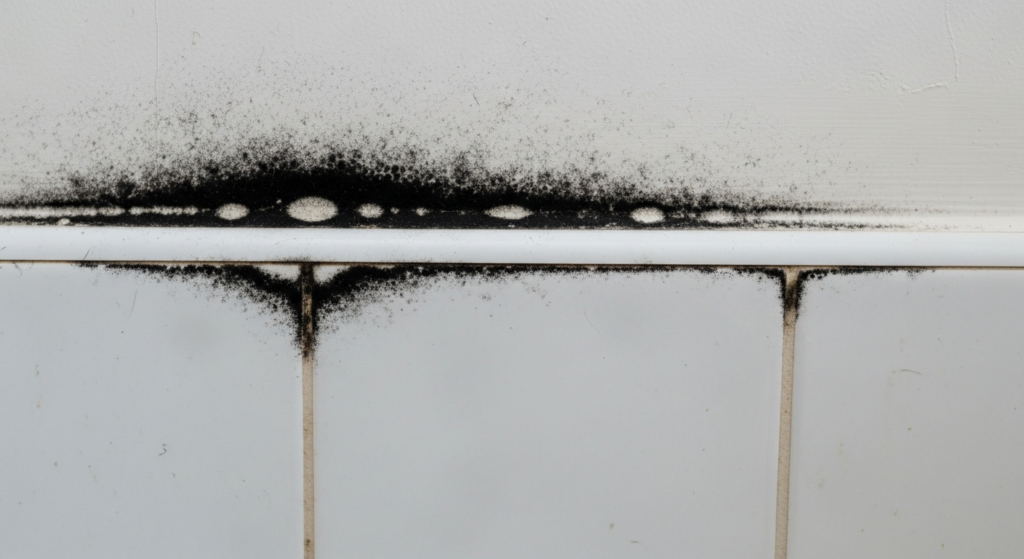
What causes black mould in the bathroom?
Black mould in the bathroom is caused by moisture sitting on surfaces for long enough that airborne spores can settle and grow. Bathrooms combine hot water, steam and limited airflow, which keeps humidity high and surfaces wet. Add cold spots, poor extraction and sealed windows, and you create perfect conditions for colonisation.
Common triggers include:
- A weak or broken extractor fan that fails to clear steam
- Showering or bathing with the door shut and no ventilation
- Cold external walls where warm, moist air condenses
- Leaking pipes, failed sealant or grout letting water track behind tiles
- Drying laundry in the bathroom, adding moisture to the air
Is black mould in the bathroom dangerous to health?
Black mould can affect health, particularly for people with asthma, allergies, respiratory conditions or weakened immunity. Exposure to spores may trigger coughing, wheezing, a blocked or runny nose, irritated eyes and worsened asthma symptoms. Babies, young children and older adults are more vulnerable, so persistent bathroom mould should never be ignored.
Small, isolated patches on sealant or grout are usually manageable at home. Widespread growth, mould that keeps returning, or staining that spreads onto walls and ceilings suggests a larger damp issue that warrants a professional mould inspection to identify the source.
Not sure what you're dealing with?
Send us a photo on WhatsApp. We'll tell you what it is, no charge, no obligation.
How do I remove black mould from the bathroom safely?
You can remove small patches of black mould safely using a fungicidal cleaner, protective gloves and a mask, working in a ventilated space. Avoid scrubbing dry mould, which releases spores into the air. Follow a careful process rather than reaching straight for bleach.
- Open a window and switch on the extractor fan to ventilate the room.
- Put on rubber gloves, an FFP2 mask and old clothing you can wash afterwards.
- Apply a proprietary fungicidal mould remover to the affected area and leave it to dwell as instructed.
- Wipe away with a disposable cloth, never a dry brush, to avoid spreading spores.
- Dispose of cloths in a sealed bag and wash any reusable items at a high temperature.
- Dry the surface fully and keep the room ventilated afterwards.
For mould covering more than about one square metre, or growth on porous surfaces like plaster and ceilings, stop and seek professional mould remediation rather than tackling it yourself.
How do I stop black mould coming back?
You stop black mould returning by controlling moisture and improving ventilation so surfaces stay dry between uses. Cleaning alone treats the symptom, not the cause. The goal is to lower humidity and clear steam quickly every time the bathroom is used.
- Run the extractor fan during showers and for 15 to 20 minutes afterwards
- Keep the bathroom door closed while showering to contain steam, then ventilate
- Wipe down tiles, screens and sealant after bathing
- Repair leaks, regrout and replace failed sealant promptly
- Avoid drying laundry in the bathroom where possible
- Consider a more powerful or humidity-sensing extractor fan
When should I get a professional Damp, Mould and Water Damage Assessment?
You should arrange a professional survey when bathroom mould keeps returning, spreads beyond sealant and grout, or appears alongside damp patches, peeling paint or a musty smell. These signs point to a moisture source that surface cleaning will not resolve, such as a hidden leak, condensation or penetrating damp.
We confirm the price on a written quote once we understand the problem. You receive a full insurance-ready written report with a photographic evidence appendix, clear findings and prioritised recommendations, so you know exactly what is driving the problem and what to tackle first. The cost of any remedial work afterwards depends on the source, the extent of affected materials and the access required, which the survey sets out in plain terms before you commit to anything.
Frequently Asked Questions
Does bleach kill black mould in the bathroom?
Why does black mould keep coming back after I clean it?
Can poor ventilation alone cause bathroom mould?
What does a survey actually tell me?
Arrange your Damp, Mould and Water Damage Assessment
Damp & Mould Solutions UK carries out Damp, Mould and Water Damage Assessments across the UK, including central, north, south, east and west London and the surrounding boroughs. If black mould keeps returning in your bathroom, call us on 020 3051 8478 or send photos via WhatsApp for an initial view before we arrange your assessment.
If you've got damp, mould, or a leak, you already know it needs sorting.
The longer it sits, the worse it gets. Get in touch and we will agree a date with you. If it is urgent, say so when you call.