

Damp Patch on the Ceiling: Is It a Leak or Condensation, and How Do You Tell?
A damp patch on the ceiling could be a leak or condensation. Here's how to tell the difference by shape, location and weather, and when to call a specialist.
What’s the real difference between a leak and condensation?
A leak is water getting into the building from somewhere it shouldn’t. A failed pipe joint, a cracked roof tile, an overflowing bath, a badly sealed piece of flashing. Condensation is moisture that’s already inside the house, from cooking, showering, drying washing on radiators, even just breathing, turning back into liquid water when it hits a cold surface.
Both end up looking like a stain on the ceiling, which is why people mix them up so often. But they need completely different fixes. A leak needs a repair at the source. Condensation needs better ventilation and heating, not a repair at all. Get the diagnosis wrong and you’ll be looking at the same patch again in a few months, just with a fresh coat of paint on top of it.
What does a leak patch look like?
- Irregular, blotchy shape, often with a darker ring or tide mark around the edge
- Appears in one specific spot, usually below a bathroom, a roof valley, or a pipe run
- Gets worse after heavy rain, or when the bath or shower above has been used, rather than tracking the temperature
- Feels damp or actually wet when you touch it, not just discoloured
- Keeps coming back in the same place no matter how many times it’s painted over
- Can bring blistering paint, softening plaster, or a sagging patch of ceiling if it’s been left long enough
What does a condensation patch look like?
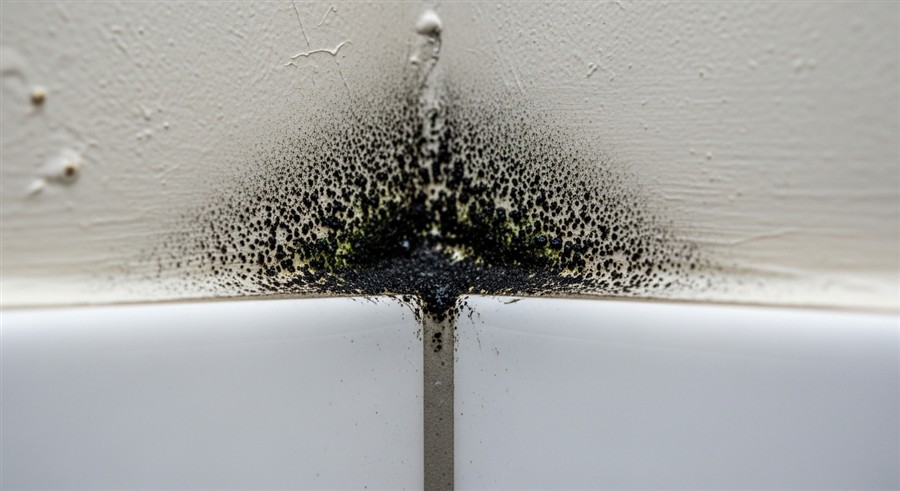
- More even and greyish, often with a soft, fuzzy black mould edge rather than a hard tide mark
- Clusters in the coldest part of the room, corners, above wardrobes, north-facing ceilings, or above a bathroom or kitchen with weak extraction
- Tracks the season and the weather outside, worse in cold snaps, better once the room warms up
- Damp or cool to the touch rather than actively wet
- Often dries out completely between cold spells, without any work being done to it
- Usually turns up alongside condensation on the windows and a musty smell, not a puddle
How do I check which one I’ve got?
Run through these five checks. The more of them point the same way, the more confident you can be.
- Touch it. Actively wet or soft plaster points to a leak. Just cool and damp points to condensation.
- Check the weather link. Worse after rain, or after the bathroom above has been used, points to a leak. Worse in cold weather regardless of rain points to condensation.
- Look at the shape. A hard-edged tide mark or ring points to a leak. An even, spread-out grey patch points to condensation.
- Check what’s above. A bathroom, a flat roof, or a valley above the patch raises the odds of a leak. Nothing but loft space or a cold roof above, with poor ventilation in the room, raises the odds of condensation.
- See if it dries out. Fully clearing in warmer weather with no work done to it usually means condensation. Coming back regardless of ventilation or the season usually means a leak.
If two or more of these point to a leak, treat it as a leak. Painting over it just hides the patch while the water carries on doing damage underneath.
Not sure what you're dealing with?
Send us a photo on WhatsApp. We'll tell you what it is, no charge, no obligation.
What does each cause actually mean?
If it’s condensation, it means moisture in the air has nowhere to go and a cold surface is triggering it to turn back into water. The fix is ventilation, heating and airflow, an extractor fan that actually vents outside rather than into the loft, trickle vents left open, lids on pans, washing dried somewhere with air moving. Left alone it turns into black mould, but the fix itself is manageable and doesn’t involve opening anything up.
If it’s a leak, it means water is getting into the structure from a specific point of failure, and the structure stays wet for as long as that source keeps running. Left alone it can rot timber, damage the ceiling itself, and spread through insulation and into other rooms. The fix always starts with finding the actual source. Not the patch, the source.
When should I call in a specialist?
If you’ve run through the checklist and you’re still not sure, or it points to a leak but you can’t find an obvious source, that’s the point to bring someone in rather than keep guessing. Guessing is the expensive option. A decorator will paint over a leak. Some damp-proofing contractors will sell a chemical treatment for what’s actually a leak. Neither one finds the water.
A proper investigation starts with full moisture mapping across the affected ceiling and the room below, so you can see exactly where the moisture is and how far it’s spread, plus a root-cause diagnosis rather than a guess. Where a leak is suspected, we use non-destructive detection methods, including thermal imaging and acoustic equipment, to trace the source before anything gets opened up. Diagnosis comes first, always, before any repair work is agreed.
We confirm the price on a written quote once we understand the problem. Our Damp, Mould and Water Damage Assessment (what many people call a damp survey) includes that full moisture mapping, the root cause identified, and a written, insurance-ready report with a photographic evidence appendix, so you know exactly what’s going on and what it will take to fix it. If a leak is confirmed and needs tracing to its exact source, that’s a separate piece of work, and we quote for leak detection on its own once the source is known.
Frequently Asked Questions
Does a damp patch on the ceiling always mean a leak?
Will a damp patch dry out on its own?
Is a damp patch above a bathroom always from that bathroom?
How much does it cost to find out what’s causing a damp patch?
If you’re staring at a patch on the ceiling and still can’t call it, don’t spend another few months repainting it and hoping. Book a Damp, Mould and Water Damage Assessment and we’ll tell you, in writing, what’s actually going on and what it will take to fix it properly.
If you've got damp, mould, or a leak, you already know it needs sorting.
The longer it sits, the worse it gets. Get in touch and we will agree a date with you. If it is urgent, say so when you call.