

Mould in Bathrooms: Why Surface Cleaning Never Works
Surface cleaning never fixes bathroom mould because it ignores the moisture source and spores rooted in grout and plaster, so growth keeps returning.
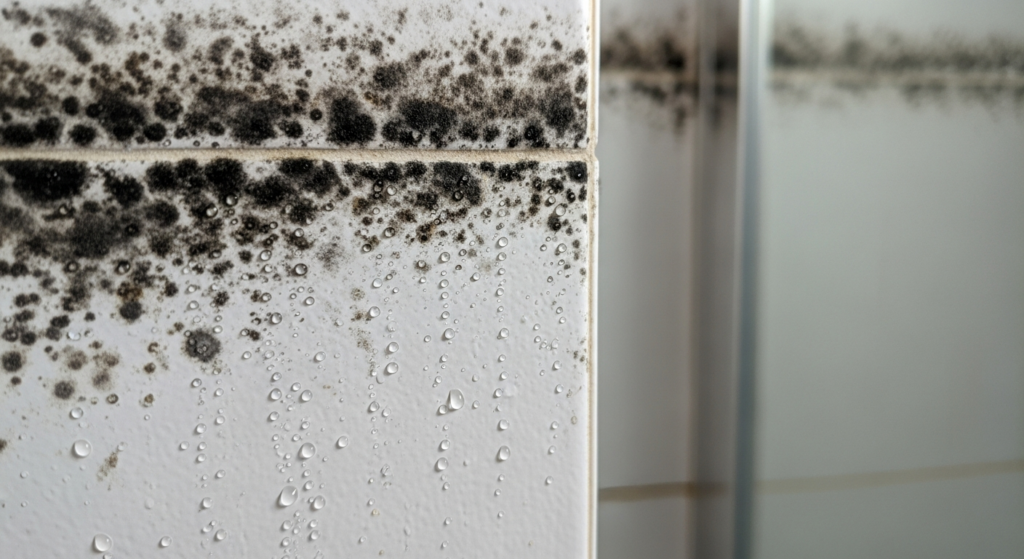
Mould in a bathroom is almost always a symptom, not a problem in itself. Wiping it away with a spray treats the stain while leaving the cause untouched. The result is a frustrating cycle of cleaning and regrowth that a proper diagnosis ends for good.
Why does bathroom mould keep coming back after I clean it?
It comes back because cleaning removes the surface colony but not the moisture feeding it or the hyphae rooted into porous materials. Bleach and supermarket sprays lift the black staining from the surface of grout and silicone, but the mould has already grown roots into those materials and into the plaster behind them. As soon as warm, humid air condenses on the cold surface again, the colony regrows from what was left behind.
What actually causes mould in a bathroom?
Condensation is the usual cause: warm, moisture-laden air from showers and baths meeting cold surfaces such as tiles, window reveals and external walls. When that air cannot escape, the water vapour settles on the coldest surfaces and feeds mould growth. Common contributing factors include:
- Inadequate or broken extractor ventilation
- Windows kept closed during and after bathing
- Cold external walls with little or no insulation
- Drying laundry on radiators inside the bathroom
- Leaks behind tiles, around baths or from waste pipes
- Rising or penetrating damp adding to the overall moisture load
Each of these needs a different response, which is why guessing rarely fixes it. A mould inspection identifies which factors are at play in your specific bathroom rather than assuming.
Not sure what you're dealing with?
Send us a photo on WhatsApp. We'll tell you what it is, no charge, no obligation.
Is bathroom mould dangerous to my health?
Yes, prolonged exposure to bathroom mould can affect health, particularly for people with asthma, allergies, weakened immune systems, the very young and the elderly. Mould releases spores and, in damp conditions, can trigger respiratory irritation, coughing, wheezing and worsening of existing conditions. The risk rises with the size of the affected area and how long it has been present. This is one reason a quick wipe is not enough: the visible patch may be only part of a larger problem hidden behind sealant or inside the wall build-up.
How do I get rid of bathroom mould properly and permanently?
You get rid of it permanently by diagnosing and removing the moisture source first, then carrying out controlled remediation of the affected materials. The reliable sequence is:
- Survey the bathroom to confirm the moisture source, whether condensation, a leak, or penetrating damp.
- Fix the cause: improve extraction, address cold surfaces, or repair the leak identified.
- Remove or treat contaminated grout, sealant and any affected plaster rather than painting over it.
- Reinstate finishes correctly so surfaces stay dry and ventilation works as intended.
- Monitor humidity to confirm the conditions that grew the mould no longer exist.
Professional mould remediation follows this order so the problem does not simply return. Skipping straight to step three, which is what surface cleaning does, is why the mould always comes back.
What does a Damp, Mould and Water Damage Assessment include and what does it cost?
We confirm the price on a written quote once we understand the problem. Our Damp, Mould and Water Damage Assessment (what many people call a damp survey) pinpoints exactly why your bathroom is growing mould. You receive a full insurance-ready written report with a photographic evidence appendix, clear findings and prioritised recommendations, so you know precisely what is driving the problem and what to do about it in order of importance. The cost of any remedial work that follows depends on the cause identified, the extent of the affected area, the materials involved and how easy access is, all of which the survey sets out in plain terms before anyone commits to anything. The fixed survey fee means there are no surprises at the diagnosis stage.
Can I tell whether it is condensation or a hidden leak myself?
Sometimes, but not reliably, which is why mould near baths, showers and external walls is worth checking properly. There are clues you can look for:
- Condensation tends to appear on the coldest surfaces and worsens in winter
- A leak often produces a persistent damp patch that does not dry out, even when the room is well ventilated
- Staining that spreads beyond the wet zone of the room can point to a tracking leak
- Musty smells with no visible mould can indicate moisture trapped behind tiles or panels
The difficulty is that these causes overlap and can occur together. Moisture readings and a trained eye separate them, which a guess cannot.
Frequently Asked Questions
Does bleach kill bathroom mould for good?
How quickly does bathroom mould come back after cleaning?
Is black mould in the bathroom worse than other colours?
Do I need a survey if the mould patch is small?
If you've got damp, mould, or a leak, you already know it needs sorting.
The longer it sits, the worse it gets. Get in touch and we will agree a date with you. If it is urgent, say so when you call.