

How to Find a Hidden Water Leak in Your Home
Learn how to find a hidden water leak using the meter test and key warning signs, plus when professional leak detection in London is worth it.
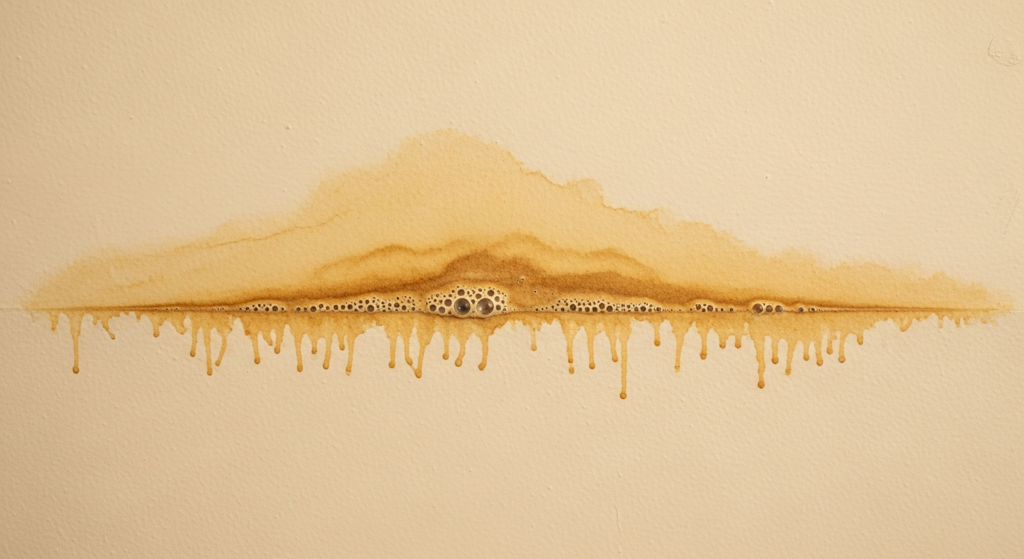
What are the signs of a hidden water leak?
The clearest signs of a hidden water leak are unexplained damp patches, a rising water bill and the sound of running water when nothing is in use. Hidden leaks rarely announce themselves with a visible puddle, so you are reading clues rather than seeing the source directly.
- Damp or discoloured patches on walls, ceilings or skirting that spread over days.
- A musty, earthy smell that lingers even after cleaning.
- Water bills climbing with no change in your usage.
- Warm areas on a floor (a sign of a hot water or heating pipe leak).
- Boiler pressure dropping repeatedly and needing topping up.
- Peeling paint, bubbling plaster or lifting floor coverings.
- Mould appearing in one specific area rather than across a room.
If two or more of these appear together, treat it as an active leak rather than general damp.
How do I check my water meter for a leak?
Use the water meter test: shut off every tap, the washing machine, the dishwasher and any outside taps, then read the meter, wait 30 to 60 minutes and read it again. Movement with everything off confirms water is escaping somewhere on your supply.
- Turn off all taps and appliances that use water.
- Find your meter (usually at the boundary, under the kitchen sink or in a path-side chamber).
- Note the exact reading, including the small dials.
- Avoid using any water for 30 to 60 minutes.
- Read the meter again. Any change means a leak on your side of the supply.
Where are hidden leaks most often found?
Hidden leaks are most often found behind bathroom and kitchen walls, under solid floors, in central heating pipework and at failed seals around baths, showers and toilets. These spots combine pressurised water with surfaces that hide the early stages well.
- Under-floor heating and buried pipe runs in screed or concrete.
- Concealed cistern and toilet supply connections.
- Failed shower trays, grout and silicone where water tracks behind tiles.
- Roof and flat-roof junctions that mimic plumbing leaks.
- External supply pipes between the boundary and the property.
Because water travels along joists and through cavities, the visible damp patch is often some distance from the actual leak. That gap is exactly why guesswork leads to unnecessary damage.
Not sure what you're dealing with?
Send us a photo on WhatsApp. We'll tell you what it is, no charge, no obligation.
When should I call a professional leak detection service?
Call a professional leak detection service when the meter confirms a leak but you cannot see the source, when damp keeps returning after repairs or when the only way to find it would mean ripping up floors or walls. Targeted detection saves you from destructive trial and error.
Our professional leak detection uses non-destructive methods to pinpoint the exact location before anyone lifts a tile. We combine:
- Acoustic detection to hear water escaping under pressure inside pipes.
- Thermal imaging to map temperature differences from leaking hot or cold water.
- Tracer gas to follow a safe gas through pipework to the precise break.
You receive a clear written report identifying the leak position, so any repair is targeted rather than speculative. Where water has already soaked into the fabric of the building, our structural drying service removes the trapped moisture properly and prevents mould taking hold.
How much does professional leak detection cost?
We confirm the price on a written quote once we understand the problem. We will agree a date with you. If it is urgent, call us on 020 3051 8478.
The value lies in precision: locating the leak to within a small area means repairs are focused, walls and floors stay intact where possible, and you are not paying tradespeople to chase the problem blind. Leak detection is a separate service from a damp survey, and it is the right call when the priority is finding water that is actively escaping.
Can a hidden leak cause damp and mould?
Yes, a hidden water leak is one of the most common causes of persistent damp and mould, because it feeds moisture into walls, floors and timber continuously. Unlike condensation, a leak does not respond to ventilation or heating, so the damp simply returns no matter how often you redecorate.
The longer a leak runs, the more it spreads through plaster, joists and insulation, raising the cost of repair and creating conditions for black mould. Finding and fixing the source quickly is far cheaper than treating the damage it leaves behind.
Arrange professional leak detection
Damp & Mould Solutions UK provides professional leak detection across the UK, including London boroughs such as Camden, Islington, Hackney, Wandsworth, Lambeth, Southwark, Greenwich and the surrounding boroughs. If you suspect a hidden water leak, call us on 020 3051 8478 or send photos of the damp area via WhatsApp for an initial view of what you are dealing with.
Frequently Asked Questions
How can I tell the difference between a leak and condensation?
Will leak detection damage my walls or floors?
How much does leak detection cost?
How long does a hidden leak take to find?
If you've got damp, mould, or a leak, you already know it needs sorting.
The longer it sits, the worse it gets. Get in touch and we will agree a date with you. If it is urgent, say so when you call.