

Black Spots on Walls: What They Mean and How to Stop Them
Black spots on walls are almost always mould caused by excess moisture and condensation, and stopping them means fixing the source, not just cleaning.
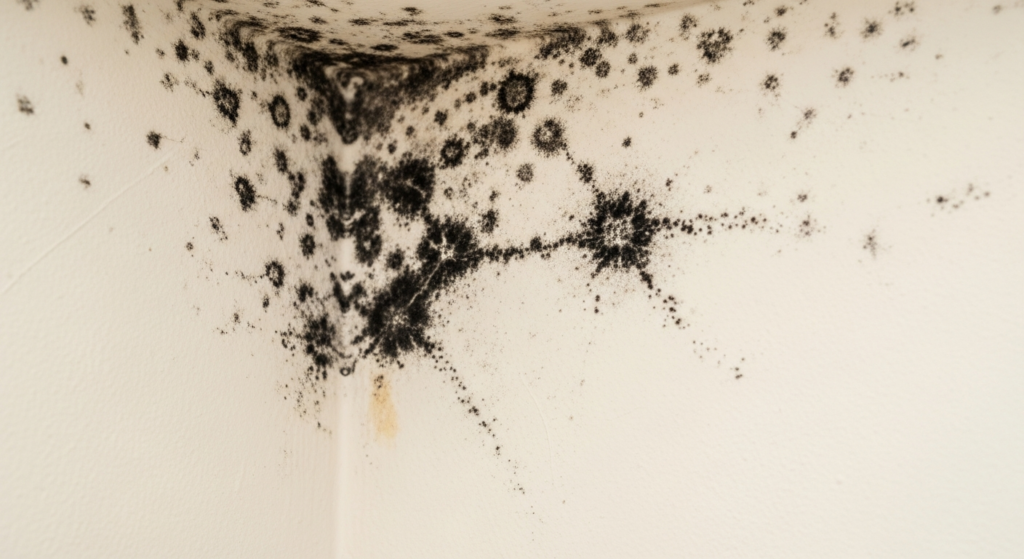
What are the black spots on my walls?
The black spots on your walls are mould, a fungus that grows wherever moisture settles on a cool surface. The spores are always present in the air, but they only colonise and become visible when given a damp, poorly ventilated environment to feed on. The most common culprit is condensation, though penetrating damp and rising damp can also create the conditions mould needs.
You will typically see these spots in predictable places:
- In cold corners and where two external walls meet
- Behind wardrobes, sofas and other furniture pushed against external walls
- Around window reveals and on the sealant of frames
- On ceilings in bathrooms and above kitchens
- Near the floor on the bottom of walls, which can point to rising damp
Are black spots on walls dangerous to my health?
Yes, black mould can affect your health, particularly for children, older people and anyone with asthma or a weakened immune system. Mould releases spores and microscopic fragments into the air, which can trigger respiratory irritation, coughing, wheezing, blocked sinuses and allergic reactions. Prolonged exposure in a damp home is linked to worsening of existing respiratory conditions.
What causes black mould spots to keep coming back?
Black mould keeps returning because the underlying moisture source has not been fixed, only the surface has been wiped clean. Cleaning treats the symptom, not the cause. To stop it permanently you have to identify why moisture is collecting on that wall in the first place. Common drivers include:
- Condensation from everyday activities such as cooking, showering and drying laundry indoors
- Poor or absent ventilation, so humid air has nowhere to escape
- Cold spots and thermal bridging, where parts of the wall stay below the surrounding temperature
- Penetrating damp from a roof defect, cracked render, faulty guttering or failed pointing
- Rising damp where a damp-proof course is missing, bridged or has failed
Without a proper diagnosis you risk treating the wrong cause. A professional mould inspection pinpoints exactly which mechanism is feeding the growth so the right remedy is applied first time.
Not sure what you're dealing with?
Send us a photo on WhatsApp. We'll tell you what it is, no charge, no obligation.
How do I get rid of black spots on walls?
Start by reducing moisture and improving ventilation, then have the cause diagnosed before any redecoration. Wiping spots away alone will not stop them returning. Follow this order:
- Reduce moisture at source: use extractor fans, cover pans when cooking, and avoid drying clothes on radiators.
- Improve airflow: open windows after showering, leave trickle vents open and pull furniture slightly away from external walls.
- Address surface mould safely using appropriate protective equipment, rather than dry brushing, which spreads spores.
- Arrange a survey to identify the moisture source if the spots are widespread, keep returning or cover a large area.
- Carry out targeted remedial work based on the findings, then redecorate once the wall is dry.
For larger or persistent outbreaks, professional mould remediation removes contamination safely and treats the surface to resist regrowth, while the moisture fix prevents it coming back.
What does a Damp, Mould and Water Damage Assessment involve and what does it cost?
We confirm the price on a written quote once we understand the problem. Our Damp, Mould and Water Damage Assessment (what many people call a damp survey) gives you certainty about the cause. A surveyor inspects the affected walls, takes moisture readings, assesses ventilation and identifies whether you are dealing with condensation, penetrating damp or rising damp. You receive a full insurance-ready written report with a photographic evidence appendix, clear findings and prioritised recommendations.
The cost of any remedial work that follows depends on factors such as the extent of the affected area, the type of damp identified, access, and how much redecoration is needed. We explain these in plain words in your report so you can plan with confidence, with no guesswork.
Frequently Asked Questions
Can I just paint over black spots on walls?
Is black mould always a sign of a serious damp problem?
Does anti-mould paint solve the problem?
How quickly can mould spread on a wall?
If you've got damp, mould, or a leak, you already know it needs sorting.
The longer it sits, the worse it gets. Get in touch and we will agree a date with you. If it is urgent, say so when you call.