

How Long Does Damp Take to Dry Out?
How long damp takes to dry out, the factors that control it, and how to speed up and confirm drying safely.
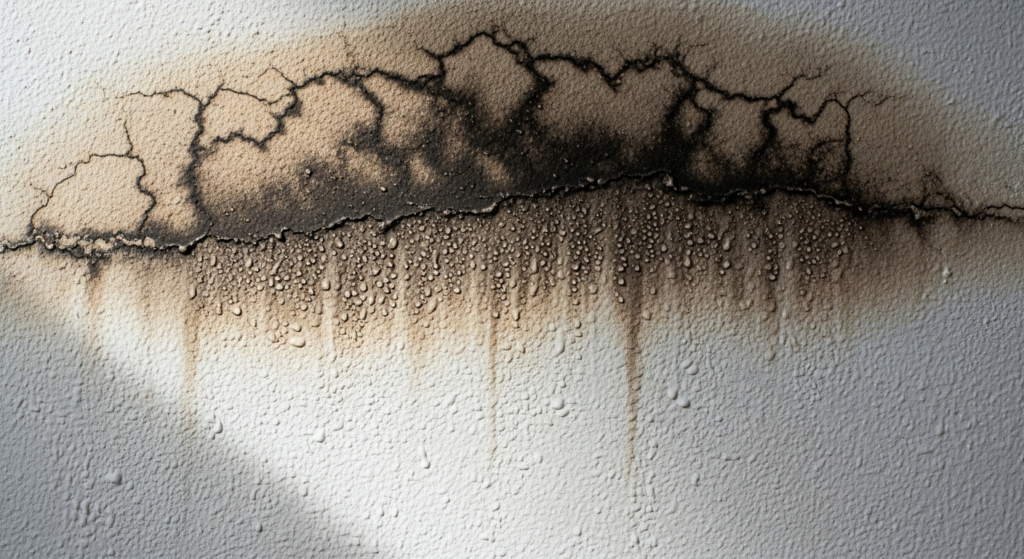
How long does damp take to dry out completely?
Most damp walls take between four and twelve weeks to dry out fully once the cause is removed, though timescales vary widely with material, thickness and conditions. A thin plastered surface affected by surface condensation can feel dry within days. A solid Victorian brick wall that has been wet for years may release moisture for several months, because masonry dries at roughly 25mm of depth per month under good drying conditions.
The key point is that drying only starts once the water source is stopped. If a leaking gutter, failed damp-proof course or penetrating defect is still feeding moisture into the structure, the wall will never dry regardless of how long you wait or how many heaters you run.
What affects how quickly damp dries?
The biggest factors are the source, the material and the surrounding air. Brick, stone and lime plaster hold and release water far more slowly than modern gypsum plaster or plasterboard. A wall that has been wet for years carries deeper, more stubborn moisture than one wet for a fortnight.
- Source control: drying cannot begin until the leak or defect is fixed.
- Material and thickness: dense, thick masonry dries slowest.
- Air temperature: warm air holds and removes more moisture.
- Ventilation: moving air carries evaporated water away from the surface.
- Humidity: high indoor humidity slows evaporation dramatically.
- Salts: hygroscopic salts in old plaster can keep a surface feeling damp even when the wall behind is dry.
How can you speed up drying safely?
You speed up drying by combining heat, ventilation and dehumidification, but always after fixing the cause. Rushing the process with intense heat alone can crack plaster and trap moisture, so a balanced approach works best.
- Find and fix the source: leak, defective gutter, failed seal, ground bridging or rising damp.
- Remove saturated, salt-contaminated plaster where it is beyond drying.
- Raise the room temperature gently and keep it steady.
- Improve airflow across the wet surface, not just around the room.
- Run a dehumidifier to pull released moisture out of the air.
- Monitor with a moisture meter weekly until readings stabilise.
For larger or long-standing damp, professional structural drying uses calibrated equipment and monitoring to dry a building back to a target moisture content. Short-term dehumidifier hire is often the most effective single step for a domestic wet wall once the defect is resolved.
Not sure what you're dealing with?
Send us a photo on WhatsApp. We'll tell you what it is, no charge, no obligation.
How do you know when damp has finished drying?
Damp has finished drying when moisture meter readings settle at a stable, low level over consecutive checks rather than continuing to fall. Visual signs alone are unreliable, because paint and plaster can look dry while the substrate stays wet.
- Moisture readings stop dropping and hold steady for two to three weeks.
- No cold, clammy feel when you place a hand on the wall.
- No tide marks, staining or salt blooming returning.
- No musty smell lingering in the room.
- Redecoration holds without bubbling or discolouration.
Why is my wall still damp after months of drying?
If a wall is still damp after months, the source has almost certainly not been fully resolved. Ongoing penetrating damp, a bridged damp-proof course, internal condensation or hygroscopic salts are the usual culprits. Many homeowners dry the surface repeatedly without ever diagnosing the true cause, so the problem returns each season.
A proper survey identifies which type of damp you have, condensation, penetrating, rising or construction moisture, and confirms whether anything is still feeding water into the structure. Without that diagnosis, drying is guesswork.
Arrange your Damp, Mould and Water Damage Assessment
Damp & Mould Solutions UK carries out Damp, Mould and Water Damage Assessments across the UK, including London boroughs such as Camden, Islington, Hackney, Wandsworth, Lambeth, Southwark, Greenwich, Richmond and the surrounding boroughs. We confirm the price on a written quote once we understand the problem. Our Damp, Mould and Water Damage Assessment (what many people call a damp survey) includes a complete insurance-ready written report with a photographic evidence appendix, clear findings and prioritised recommendations so you know exactly what is causing the damp and how to dry it out properly. Call 020 3051 8478 or send photos via WhatsApp for an initial view.
Frequently Asked Questions
How long does a damp wall take to dry after a leak?
Will a dehumidifier dry out a damp wall?
Can I paint over a wall that is still drying?
How long does rising damp take to dry out?
If you've got damp, mould, or a leak, you already know it needs sorting.
The longer it sits, the worse it gets. Get in touch and we will agree a date with you. If it is urgent, say so when you call.